Art and memory: how painters document what the world wants to forget
Reading time: 7 minutes
In August 1943, a German-Jewish painter living in hiding in a Brussels apartment completed one of the most devastating self-portraits in the history of art. Felix Nussbaum held his Jewish identity card toward the viewer, his coat pulled back to reveal the yellow star concealed beneath it. His expression was furtive, alert - the direct gaze of a man who knows he is being hunted and has decided, despite everything, to look back.
He painted it on whatever materials he could salvage. He entrusted it to a Belgian dentist for safekeeping. Less than a year later, he was arrested, deported to Auschwitz, and murdered on arrival. His last known words, addressed to the dentist, were: “If I disappear, do not let my paintings die.”
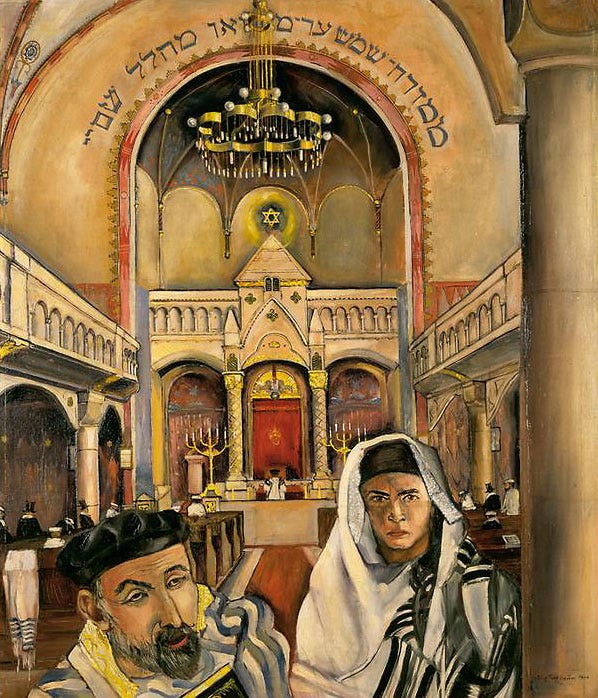
Around 400 of his 456 known paintings survived. Self-Portrait with Jewish Identity Card now hangs in the Felix Nussbaum Haus in Osnabrück, Germany - a museum designed by Daniel Libeskind, who also designed the Jewish Museum Berlin and the Ground Zero memorial in New York. It is not a famous painting in the way that Picasso’s Guernica is famous. It is something more uncomfortable than that. It is evidence.
Why painting survives when everything else disappears
The Holocaust produced an enormous archive of documentary evidence - administrative records, photographs, testimony. What it could not produce was the inside of the experience. That is what the painters did.
Esther Lurie was an award-winning painter imprisoned in the Kovno ghetto in Lithuania. At first she drew out of instinct - everything around her was so completely different from her previous life that she felt compelled to record it. When the Council of Elders discovered her talent, they formalised what she was already doing: they asked her to document everything. They understood that drawings would serve as both art and evidence for a world that might otherwise not believe what had happened.
Karel Fleischmann, a medical doctor and painter imprisoned at Terezín, documented the daily reality of ghetto life in hundreds of drawings and paintings made on whatever paper he could find. He was deported to Auschwitz in October 1944 and did not survive. His work did.
At Yad Vashem’s Art Museum, a 2023 to 2025 exhibition titled Spirit of Creativity: Resistance Through Art During the Holocaust documented how artists in the Riga ghetto painted portraits of fellow prisoners at night, after a full day’s forced labour. The significance of those portraits was explained by one of their subjects, Meir Levinstein: “It was as if he had been sent to us to inspire each one of us with a touch of bravery and infuse us with vitality: as long as we are still alive, we are not to lose faith in the Jewish people and their survival.”
To be painted was to be seen as a person. In conditions designed to erase personhood, this was an act of resistance.
The women whose testimony was almost lost
In March 2026, the Hadassah-Brandeis Institute opened an exhibition at Brandeis University titled Who Will Draw Our History? Women’s Graphic Narratives of the Holocaust, 1944-1949. It presented the work of ten artists - Ágnes Lukács, Edith Bán Kiss, Ella Liebermann-Shiber, Elzbieta Nadel, Lea Grundig, Luba Krugman Gurdus, Mária Turán Hacker, Regina Lichter-Liron, Zofia Rozenstrauch, and Zsuza Merényi - who had documented their experiences in wordless novels, handmade albums, pictorial diaries, and portfolios made between 1944 and 1949.
Four of these artists had been imprisoned in the same concentration camp. They had used their skills to survive. Their work depicted aspects of the Holocaust that were consistently ignored in official accounts: bereavement, motherhood, sexual violence, the specific experience of women in conditions designed to dehumanise.
Most of their work had remained largely unknown for eighty years. The exhibition’s curator, Rachel E. Perry, framed the gap directly: “The majority of survivors were men, so even when they represented what happened to women, it was not from a women’s perspective.”
These were not famous artists. They were not represented by galleries or collected by institutions. They made their work because there was no other way to say what they needed to say - and then it nearly disappeared anyway.
The fact that it survived is itself a form of documentary resistance. Memory, this work argues, requires active effort to preserve. Left alone, it disappears.
What contemporary artists are doing with inherited trauma
The impulse to document does not end with the events that prompted it. It passes down, transforms, and re-emerges in the work of artists who inherit the memory without having lived through it.
Anselm Kiefer, born in Germany in 1945 - on the day the war ended - has spent his entire career in direct confrontation with his country’s catastrophe. His monumental canvases incorporate lead, ash, straw, and scorched materials into surfaces that feel archaeological rather than painted. His Sternenfall (Falling Stars) series returns to the sky as an archive - vast, indifferent, witnessing everything and recording nothing. The falling stars of the title carry the weight of what happened below them.
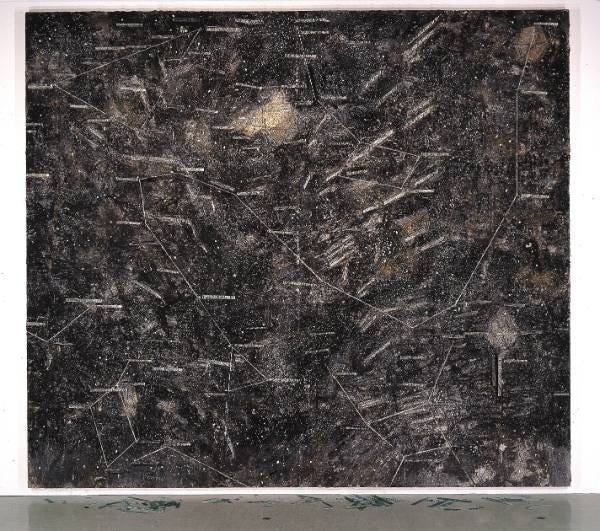
His work is not comfortable to look at. That discomfort is precisely its argument: that reconciliation is not available, that the weight of the past cannot be discharged through aesthetic resolution, and that any artwork that tries to make you feel better about what happened is lying to you.
The contemporary generation has expanded the frame beyond Europe. The 25th Biennale of Sydney, opening in March 2026 under the title Rememory - drawn from Toni Morrison’s concept of a memory so deep it becomes physical - included Nahom Teklehaimanot, an Eritrean artist who presented three large-scale canvases titled This is My Silence, You Name the Sound. His work addresses the experience of living as a refugee - displacement understood not as a political category but as a bodily condition, a balancing act between exile and solidarity.
The Post-War Art Lab, a nomadic residency programme that has brought together displaced artists from Syria, Afghanistan, and Ukraine, created an exhibition called Fragments of Home that debuted in Berlin in early 2025 and toured Brussels and Warsaw. Participants built installations using salvaged materials from bombed sites - charred wood, torn fabric, broken glass - constructing reconstructed domestic scenes layered with video testimony. Half-intact kitchens. A cracked nursery floor. Objects that insist on the life that was interrupted.
Art that confronts memory and trauma is some of the most significant work being made today - and some of the most collected. If you are working in this space, understanding the market for your work matters as much as the work itself.
What the refugee artists are making right now
In 2026, the largest displacement crisis in recorded history is still unfolding. The artists responding to it are not in museums yet. Many of them are in the places the crisis created.
In Sydney, a 2026 exhibition by Settlement Services International titled Beyond Borders brought together newly arrived refugee artists from Afghanistan, Syria, Ukraine, Congo, Burma, and Iraq. Ahmed, a Palestinian artist who had fled multiple times and was now living in Sydney, described his practice: “My artistic practice is rooted in the contemplation of memory, identity, and displacement. I draw from both personal and collective experiences. My work blends realism and impressionism and spans classical oil painting, charcoal, and digital art. I gravitate toward the silent details that are often overlooked in dominant narratives.”
In Lebanon, murals painted by children in refugee camps with trauma therapists have been featured in UN advocacy reports. In Portsmouth, British artist Nicholas Mynheer opened an exhibition titled Sanctuary at Portsmouth Cathedral in February 2026, showing paintings and sculptures that placed the Holy Family’s flight to Egypt alongside contemporary refugees crossing the English Channel. His painting The Holy Family Cross the English Channel (2025) frames the oldest story of displacement in European religious tradition as a present-tense event.
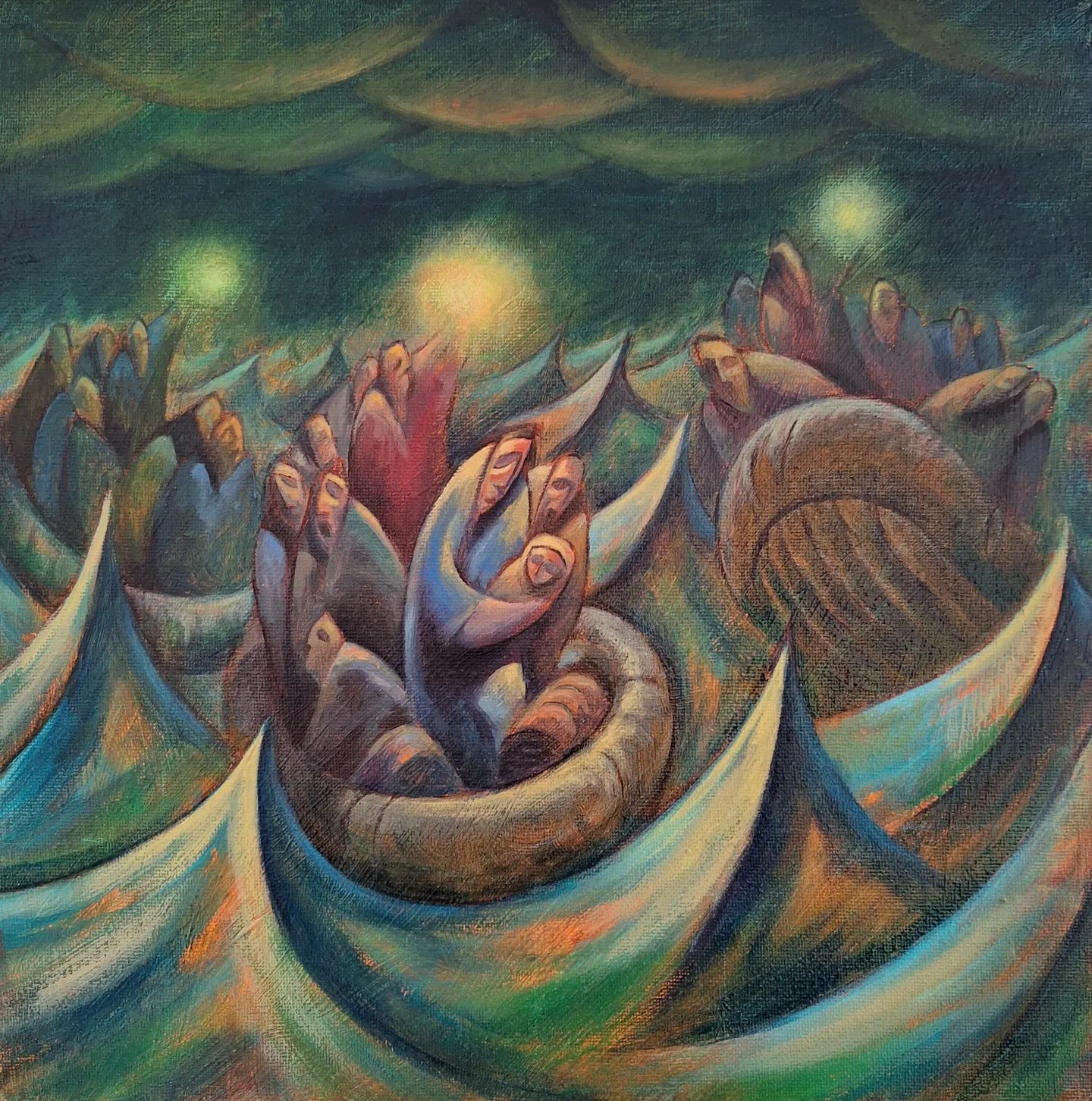
These artists are not making historical paintings. They are making paintings about what is happening now, to people who are alive, in places that are named on current maps.
Why this work matters for how we understand value
There is a market argument embedded in this history, and it is worth making directly.
The work of artists who document catastrophe tends to be undervalued in the moment it is made and dramatically revalued by history. Felix Nussbaum’s paintings were saved in a dentist’s home. Charlotte Salomon’s Life? or Theatre? - her extraordinary 769-painting sequence documenting her own life and the rise of Nazism - was entrusted to a doctor in France before she was deported to Auschwitz at twenty-six. Both artists made their work in conditions of extreme urgency and without any expectation of market recognition.
The institutional recognition came later, measured in decades. Nussbaum now has a Libeskind-designed museum. Salomon’s work hangs in the Jewish Historical Museum in Amsterdam and has been shown at major institutions worldwide.
The contemporary equivalent of this pattern is the work being made right now by artists processing displacement, post-conflict trauma, and inherited historical memory. It is being made with urgency. It is being made by people for whom the subject is not historical - it is the present tense of their lives. And it is, by any measure of what art history has repeatedly shown to matter, among the most significant work of the current period.
That does not mean it will be easy to sell. It means it deserves to be priced with the same rigour and confidence as any other work - and that artists making it should understand what they have made.
The question that painting keeps answering
Felix Nussbaum said: “If I disappear, do not let my paintings die.” He disappeared. The paintings did not.
This is what painting does that no other form of documentation can. A court record can establish that a crime occurred. A photograph can show a place at a moment. A painting - made in hiding, on salvaged materials, by a hand that knew it might be the last to touch the canvas - holds something that neither can reach. It holds the inside of the experience. The specific weight of what it felt like to be that person, in that moment, making that mark.
The artists working in this tradition today - in Sydney and Portsmouth and Berlin and Gaza and wherever the next crisis has displaced the next generation - are doing the same work. They are holding still what the world is trying to make disappear.
That is not a secondary purpose of painting. It is one of its oldest, most essential ones.
Priceyourpainting gives every artist a market-backed valuation for their specific work - whatever its subject, whatever its tradition.
References
Felix Nussbaum: self-portraits of a Jew in turmoil - Yad Vashem. yadvashem.org
Felix Nussbaum biography and works - My Open Museum. myopenmuseum.com
Spirit of Creativity: Resistance Through Art During the Holocaust - Yad Vashem Art Museum, September 2023 - May 2025. yadvashem.org
Art during the Holocaust - Jewish Women’s Archive, Pnina Rosenberg. jwa.org
Responsibility for Memory: The Role of Art in Holocaust Remembrance - United Nations. un.org
Who Will Draw Our History? Women’s Graphic Narratives of the Holocaust, 1944-1949 - Hadassah-Brandeis Institute, Brandeis University, March 2026. brandeis.edu
25th Biennale of Sydney: Rememory - March-June 2026. biennaleofsydney.art
War on canvas: how artists reimagine conflict and inspire change - ArtMajeur Magazine, May 2025. artmajeur.com
Beyond Borders: art by refugee artists - Settlement Services International, 2026. ssi.org.au
Sanctuary - Nicholas Mynheer, Portsmouth Cathedral, February-April 2026. artandtheology.org
Made with love by artists, for artists.
Stay connected with us on Instagram for more artist stories and market updates.