How artists are responding to war - stories from the front line
Last week we published a piece on what conflict does to the art market - the auction results, the collector behaviour, the prices that war-themed art achieves at Christie’s and Sotheby’s. It was a commercial analysis of a subject that is, at its core, anything but commercial.
This is the other article. The one about the people.
Four painters. Four different conflicts. Four reasons that have nothing to do with auction estimates or collector demand - and everything to do with why artists make work at all.
Anastasiia Moskvitina - watercolour as survival
Anastasiia Moskvitina is a Ukrainian painter who has spent the last three years using watercolour to capture moments of ordinary life during extraordinary conditions. A child with a pet. A kitchen table. The light through a window in a city where the windows might not be there tomorrow.
When Russia launched its full-scale invasion in 2022, Moskvitina did not switch to painting the destruction. She painted around it. Her focus on comfort, on the small preserved things, was a deliberate choice: she was painting identity against erasure. A child with a dog is not political, except when everything is political - when the act of showing that a child exists with a dog in an apartment in a city under bombardment is itself a form of testimony.
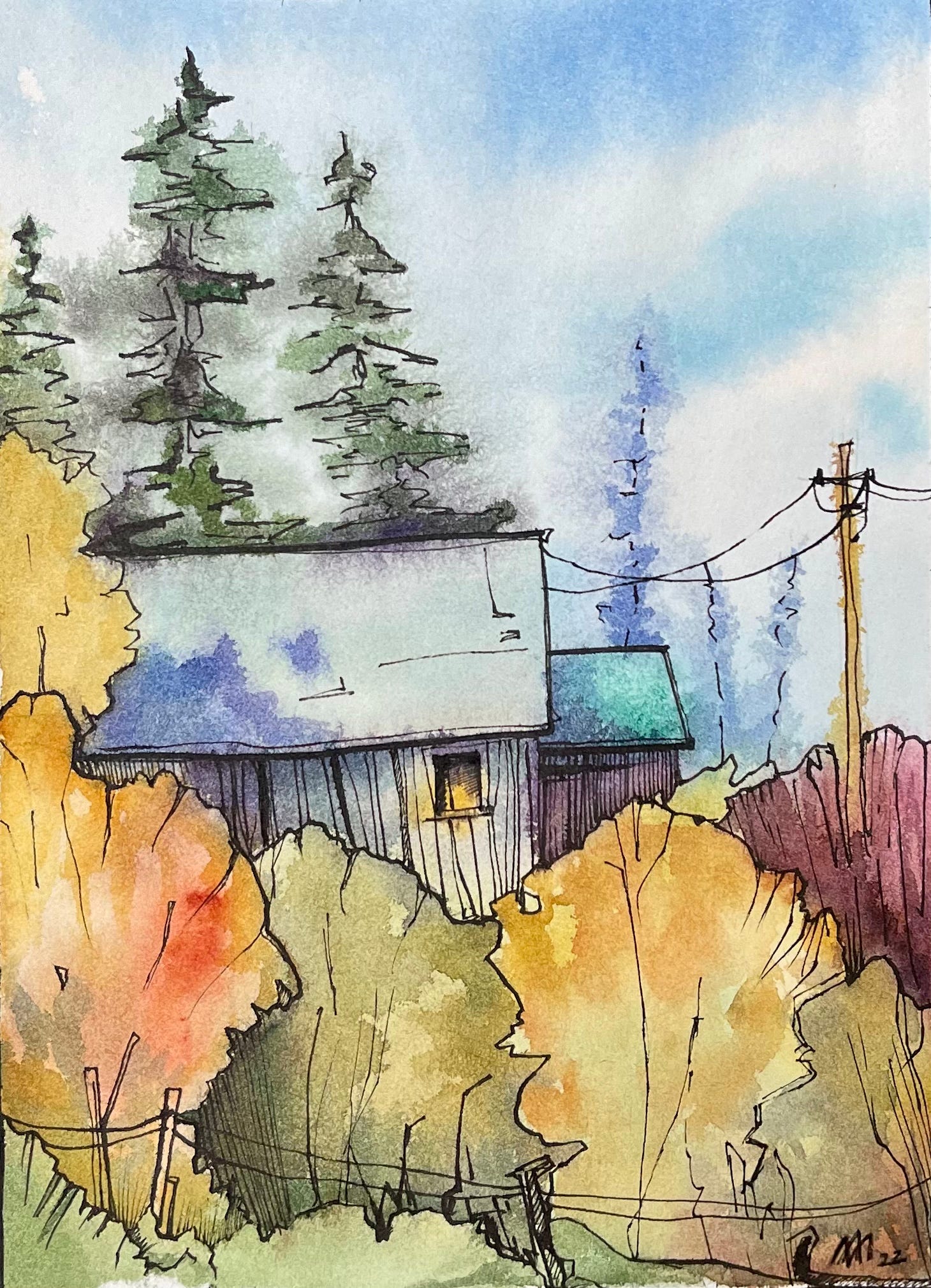
Ukrainian artists forced to adapt to wartime conditions transformed their work to reflect the raw emotions of conflict: fear, grief, and an unwavering hope for victory. Moskvitina’s work sits in the hope category. Not naive hope. The kind of hope that comes from continuing to look at the specific, the particular, the human detail, when the impulse to look away would be entirely understandable.
She has continued to sell her work internationally. In 2022, when many online platforms froze or restricted Ukrainian artist accounts in the confusion of the early invasion response, some chose to keep Ukrainian artist shops open. The ability to sell - to have a commercial relationship with the world outside Ukraine - was not just an economic act. It was a connection to normalcy.
Maisara Baroud - a daily record
In Gaza, Maisara Baroud has been producing a series of daily ink sketches titled Still Alive - a continuous record of what he sees and experiences. Not dramatic compositions with editorial distance. Daily marks. One after another. A record that is, by its continuity, a statement.
Where museums and libraries have faced destruction, painting is a literal testament to life. Baroud’s series makes this explicit in its title. Still alive. Today. This drawing exists because I made it, and I am here to make it.
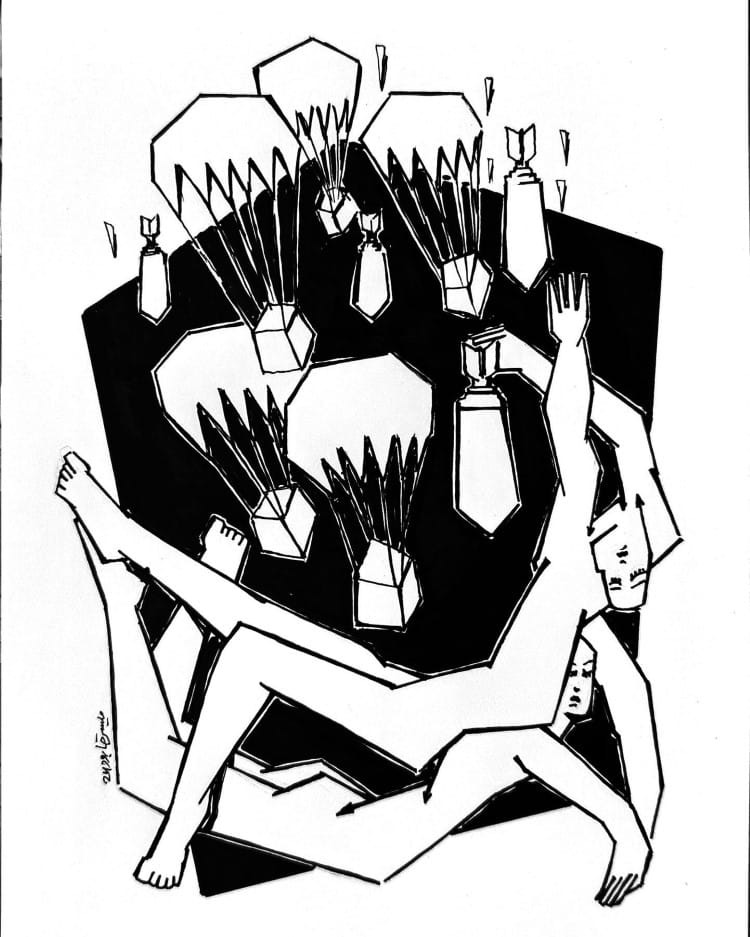
The series has been shared widely on social media - one of the ways that artists in Gaza have been using platforms to share drawings, songs, and short films despite the bombings. The distribution mechanism - a phone, an internet connection when the power is on, an Instagram account - is not incidental to the work. It is part of it. The act of sending the image out into the world is inseparable from the act of making it.
What strikes people about Baroud’s series is its restraint. These are not images designed to shock or horrify. They are records. The same commitment to accuracy that an appraiser brings to valuing a painting, Baroud brings to documenting what he sees. Some paint directly on the debris of destroyed buildings. Baroud uses paper and ink, one drawing at a time.
Vlad - a soldier who paints
In December 2025, Euronews profiled a Ukrainian soldier named Vlad who has been creating paintings throughout his active service. His works are filled with what he describes simply as fear and hope.
Vlad is not a professional painter. He trained as something else and found himself at the front. The painting came from the same place all serious painting eventually comes from: a need to process what cannot be processed any other way. The images he makes could not be made by someone who had not been where he has been. They carry the specific weight of direct experience.
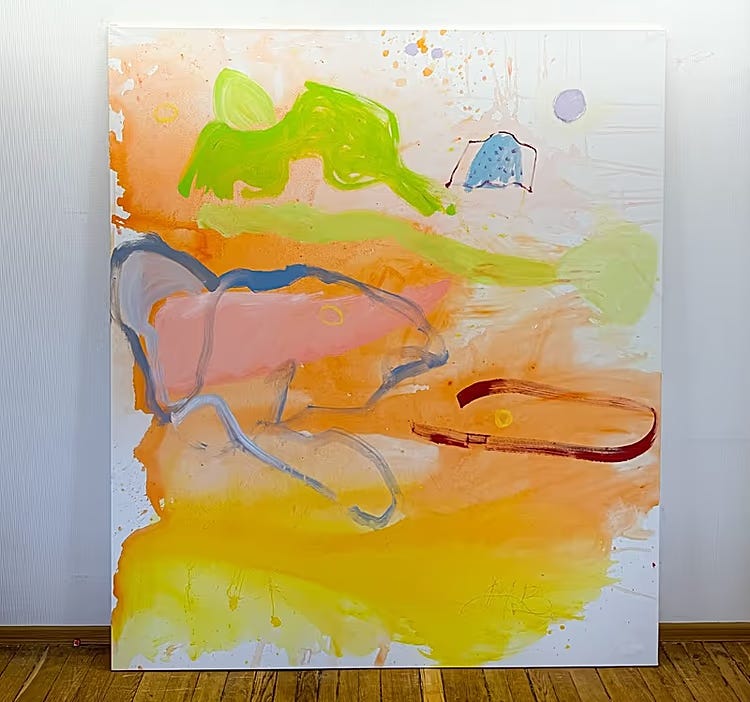
The tension between fear and hope in Vlad’s work is not resolved. That is what makes it interesting. War, in his paintings, is not a narrative with an arc. It is a condition - a sustained state of alertness and dread and occasional relief that does not build toward a conclusion. Painters who have not been there make paintings about war that have the shape of a story. Vlad’s paintings have the shape of time.
Lesia Khomenko - art as research
Lesia Khomenko is a Ukrainian painter whose retrospective, shown in 2026, did something unusual: it refused chronology. Her paintings from different stages of her career were juxtaposed not in the order they were made but in the order of their ideas - showing how a painter’s concerns remain consistent even as the world around them changes catastrophically.
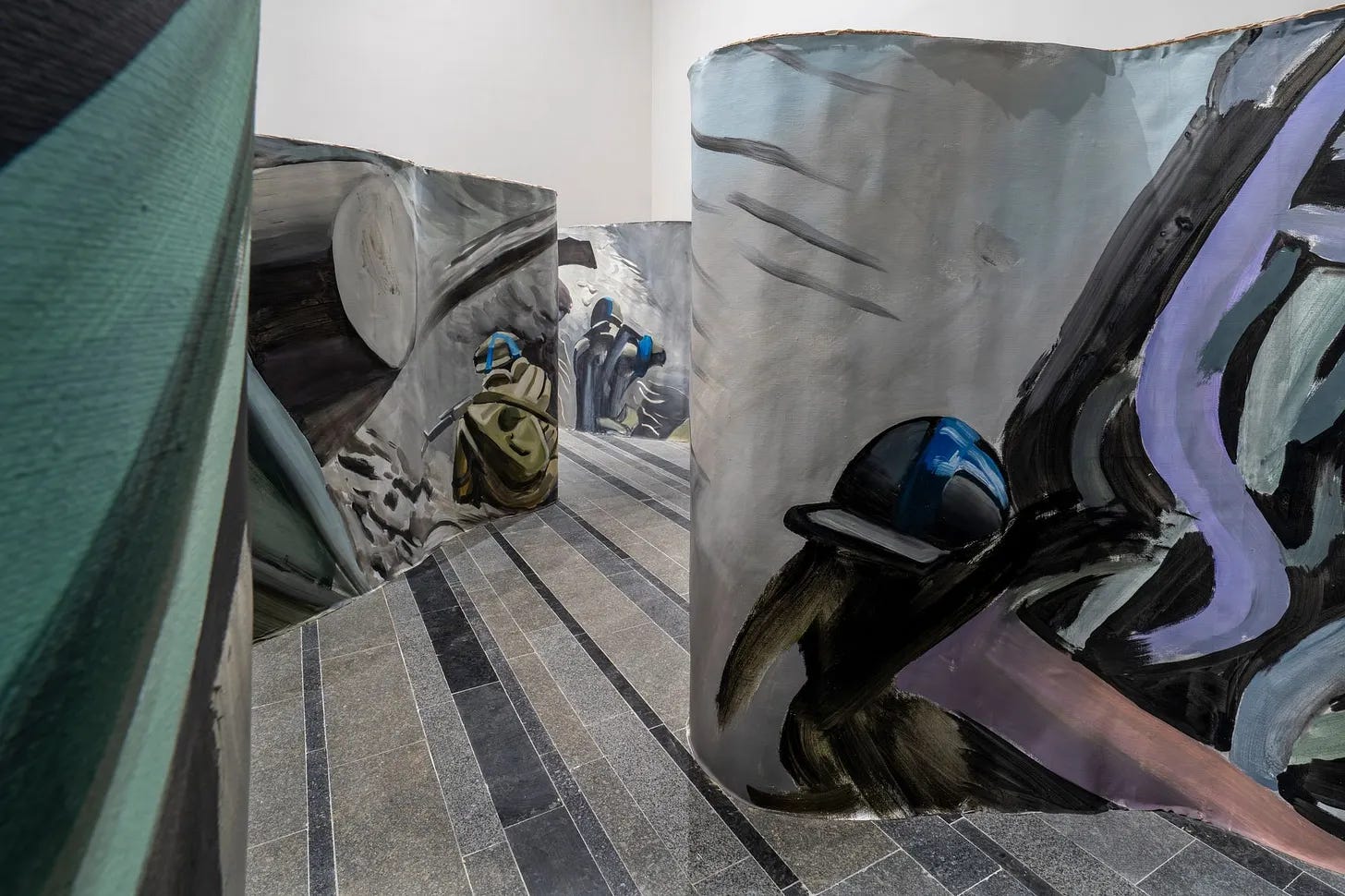
Khomenko combines a conceptual approach involving extensive research with complex formal concerns: composition, colour, how to render figures, how paint behaves when applied. Her Stepan Repin series (2009-2011) is based on her grandfather’s memories of his experiences as a Soviet soldier in World War II. A painter working from a grandfather’s wartime memories, making paintings that are now shown in the context of another war in the same country. Time in her work folds.
What her retrospective demonstrated is something relevant beyond Ukraine and beyond painting: that an artist’s serious engagement with history and conflict is not a one-off response to a single event. It is a sustained practice. The paintings Khomenko made about her grandfather’s war are in conversation with everything she has made since. The work doesn’t stop when the news cycle moves on.
What these four stories share
Four painters. Four approaches that could not be more different - the intimate watercolours of ordinary life, the daily ink record, the immediate paintings of direct experience, the conceptual long-form research. All of them working in conditions that most painters never face.
What they share is not subject matter. It is the commitment to continuing. To not putting the brushes down because the circumstances make working difficult or dangerous or beside the point. There is a particular stubbornness in that commitment - the same stubbornness that is in every painter who keeps a practice going through the ordinary difficulties of a life that has nothing to do with war.
Every painter reading this has their own version of that stubbornness. The studio session when nothing comes. The period when selling feels impossible. The moment when you wonder why you do it at all.
These four artists have their own answer to that question, arrived at in conditions none of us would choose. It turns out the answer is the same: because stopping is not an option, and because making marks - however small, however daily, however quiet - is a form of insisting that you are still here.
We protect the artist, to elevate art. Whatever you are painting, wherever you are, your work has value worth knowing.
References
Between war and peace: how do artists perceive the conflicts of our time? - ArtMajeur Magazine, May 2026. artmajeur.com
Ukrainian artists persist: creating art through war - ArtsArtistsArtwork.com, March 2025. artsartistsartwork.com
Painting through pain: artist captures Russia’s war on Ukraine - Euronews, December 2025. euronews.com
Art during wartime: learning from Ukraine - Brooklyn Rail, April 2026. brooklynrail.org
The art of war: how artists and writers battle with censorship in times of conflict - Index on Censorship, July 2026. indexoncensorship.org
Connect with Maisara Baroud on Instagram
Connect with Lesia Khomenko on Instagram
Connect with Anastasiia Moskvitina on Instagram
Connect with Vlad Melnik on Instagram