How to price oil paintings: a practical guide for artists
Of all the decisions an oil painter makes, pricing sits in an uncomfortable category: too important to guess at, too personal to treat like a spreadsheet, and somehow never taught in art school.
The result is that most oil painters either underprice confidently or overprice anxiously - and in both cases arrive at a number they cannot properly defend to a buyer, a gallery, or even to themselves.
This guide fixes that. It covers the specific formulas used for oil paintings, why oil commands a premium over other media, how to apply that premium at your career stage, and what to adjust for when the formula alone is not enough.
Why oil paintings command a higher price
Before the formula, the reasoning. Oil paintings carry a market premium over watercolour, pastel, and even acrylic for reasons that are both technical and cultural - and understanding them helps you price with genuine confidence rather than wishful thinking.
Oil paintings on canvas frequently attract price premiums due to their perceived durability and possible artistic prestige. This is documented across hedonic pricing studies of art auction data - medium and support type consistently influence valuation, with oil on canvas sitting at the top of that hierarchy.
The technical reasons are real. Oil paint is suspended in drying oils - typically linseed or safflower - which gives it a slow drying time that allows for blending, layering, and reworking in ways that faster-drying media do not permit. The resulting surface has depth and luminosity that collectors and collectors’ eyes have associated with quality for five centuries. When a collector stands in front of an oil painting in a gallery, they are seeing a surface that catches light differently from paper or from a screen - it has what designers in 2026 call “visual weight.”
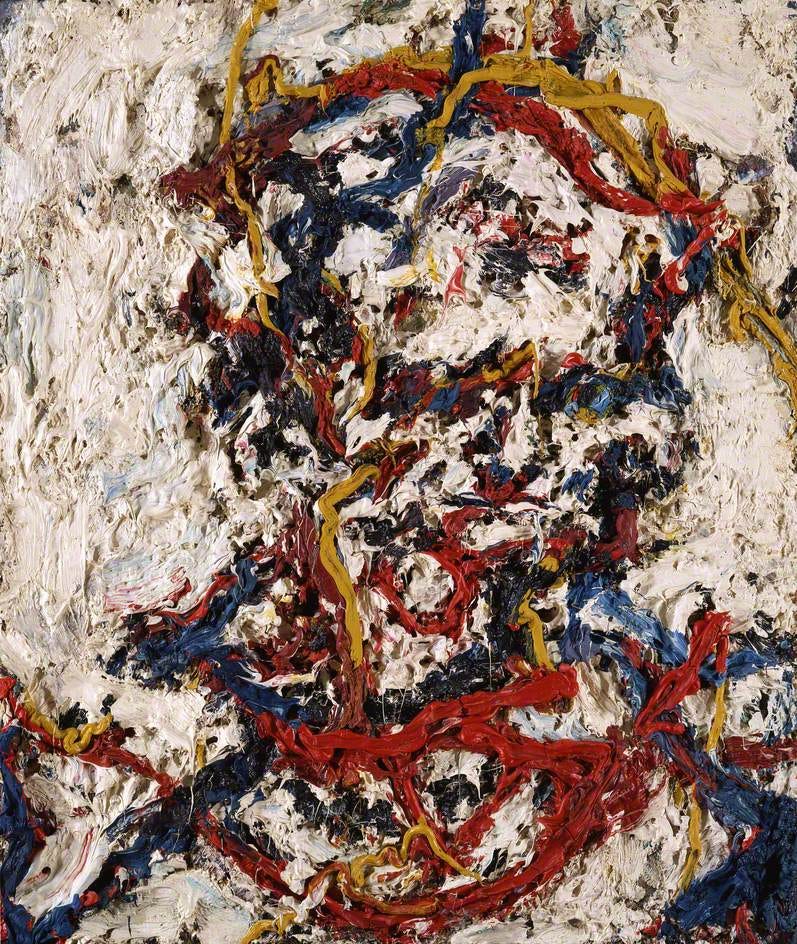
The trend for 2026 high-end interior design leans toward “understated elegance” with texture as its soul - this is manifesting in the rise of biophilic murals and hand-painted landscapes that bring the outdoors in. Oil is central to this shift. The tactile, layered quality of oil paint is precisely what collectors are responding to as the market moves away from digital reproduction and AI-generated imagery.
The US Bureau of Labor Statistics states 38% of professional painters preferred oil paints over acrylics for gallery and exhibition work, and the global fine art oil paints market reached $4.41 billion in 2025. This is not a niche medium - it is the primary medium of professional fine art, and its pricing should reflect that.
The formula for pricing oil paintings
Oil paintings are priced using the same two foundational methods as other media - the square inch method and the time-and-materials method - but with a medium multiplier applied specifically to oil that reflects its market position.
The square inch method for oil
Multiply width by height in inches to get the total square inches, then multiply by your rate per square inch for your career stage.
Rates by career stage (UK and European market, 2026):
Emerging artists (first 1-5 years selling, limited exhibition history): £1.00-£1.50 per square inch for direct sales, £2.00-£3.00 per square inch for gallery sales.
Developing artists (5-10 years, some exhibition history, building collector base): £2.50-£4.00 per square inch.
Established artists (gallery represented, consistent sales record): £5.00-£8.00 per square inch and above.
A worked example for an emerging artist: a 16 x 20 inch oil on canvas at £1.50 per square inch gives 320 square inches x £1.50 = £480 as a base. Add materials and time using the method below to arrive at your final price.
As your reputation and demand grow, the rate grows with them.
The time-and-materials method
Add the total cost of materials - canvas, oil paint, mediums, brushes, varnish, everything used specifically for this painting - to the time invested multiplied by your hourly rate.
For oil painters specifically, material costs are meaningfully higher than for watercolour or pastel. Professional-grade oils - Winsor & Newton, Old Holland, Michael Harding - cost significantly more than student-grade alternatives, and using them is both a quality signal and a legitimate cost. Track every tube you open for a specific painting. If you used half a 37ml tube of Old Holland Cadmium Yellow at £22 a tube, that is £11 in your cost column.
Track your time honestly. This is your job, not a hobby you are squeezing in, and you deserve to be paid for every hour.
Using both methods
Calculate both figures and take the higher result. This is the professional approach. If the square inch method gives you £480 and your time-and-materials calculation gives you £620, price the painting at £620. The formula gives you a floor, not a ceiling.
The oil-specific adjustments
Beyond the base formula, four factors apply specifically to oil paintings and should adjust your price upward or downward from the formula result.
Canvas vs board. Oil on canvas carries a slight premium over oil on board in most collecting contexts - canvas is associated with ambition and scale, while board is associated with intimacy and the plein air tradition. Neither is wrong, but they serve slightly different markets. A 40 x 50cm oil on linen canvas will typically price 10-15% above the same composition on a cradled panel, all else being equal.
Linen vs cotton canvas. Professional-grade linen is more expensive to buy and more demanding to prepare than cotton canvas. Collectors who know the medium recognise this difference. Paintings on high-quality linen can carry a premium of 15-20% over the same work on cotton canvas, provided the quality of the painting itself supports it.
Complexity and surface. An oil painting built up over multiple sessions with visible layering, glazing, and impasto work represents more time and more skill than a single-session alla prima piece of the same dimensions. The intricate brushstrokes in a hyper-realistic painting may carry a higher price tag than a minimalist piece, reflecting the complexity and time investment. Apply this adjustment honestly - not every painting with visible brushwork is technically complex.
Framing. A well-framed oil painting is a different object from an unframed one. Frames for oil paintings represent a real cost - a quality hand-carved frame for a 60 x 80cm canvas can cost £150-£400. This cost should be either included in the price with framing specified, or excluded with the option offered as an add-on. Never absorb framing costs silently into your price without noting it - collectors should understand what they are paying for.
Want to know where your oil painting sits in the current market relative to comparable work? Our AI valuation gives you a market-backed price range based on real recent sales in your medium and career stage.
Gallery pricing vs direct pricing
This is where most oil painters make an expensive mistake.
If you work with galleries, you must factor in their commission from day one. Galleries typically take a 50% commission. If your formula gives you a price of £800, that is your take-home pay. The retail price on the gallery wall needs to be £1,600. Your prices must also be the same everywhere. Undercutting your gallery is a fast way to damage an important professional relationship.
The practical rule: work out your formula price as your net revenue. Double it for your gallery retail price. Use the same retail price everywhere, including on your own website, at open studios, and on Instagram. Consistency protects both your gallery relationship and your market positioning.
If you do not currently work with a gallery but intend to, price now as if you do. Set your retail price at the gallery-adjusted figure. This means your direct-sale margin is higher in the short term, which is legitimate - you are doing the work the gallery would otherwise do - but your pricing remains consistent and professional when you eventually bring a gallery in.
Market research before you finalise
This does not mean copying the artist in the booth next to you at an art fair. It means doing a little reconnaissance so your prices are in the right ballpark. If you calculated a price of £5,000 but artists with similar experience are selling comparable work for £1,500, revisit your numbers.
For oil painters specifically, spend 20 minutes on Saatchi Art filtered to oil paintings, your approximate size range, and your career stage. Look at what is selling - not just what is listed, but what has sold (Saatchi shows this). Browse the Affordable Art Fair website, which publishes sold prices from recent fairs. Check one or two auction results on Invaluable or LiveAuctioneers for artists with a profile similar to yours.
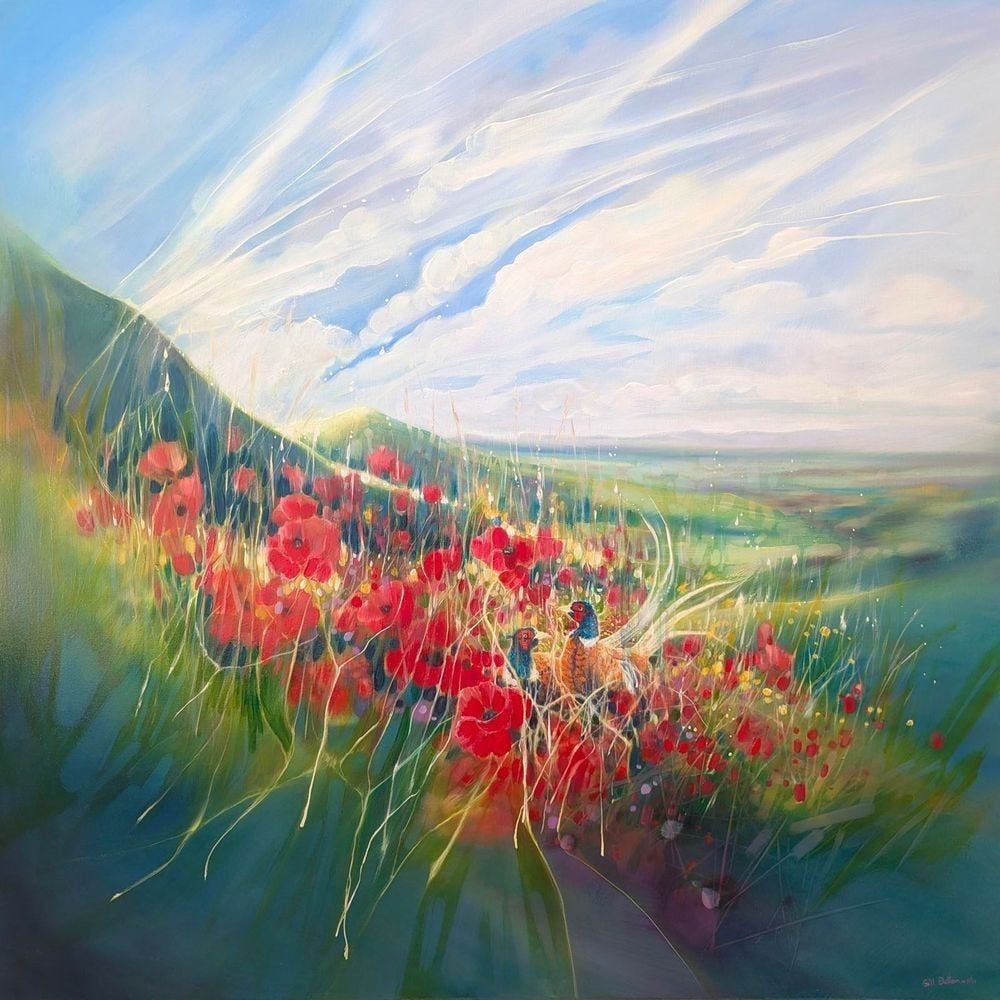
UK-based oil painter Gill Bustamante works from her East Sussex studio, building landscapes in layers of glaze and impasto directly from memory of walks across the South Downs. Her 36-inch canvases sell for £1,900 - a useful benchmark for how a developing UK oil painter prices work for direct sale to collectors.
This market research is not about copying prices. It is a sanity check. Your formula tells you what your painting should cost to make and what you should earn for your time. Market research tells you whether the buyer pool will support that number in the current environment.
If the formula and the market align, price with confidence. If they diverge significantly, understand why before you adjust either number.
Never reduce a price you have already set
As you start to sell consistently, you earn the right to raise your prices. A small, confident increase with every new collection is a strong way to build your market value over time.
The corollary is equally important: once you have set a price, do not lower it. If an oil painting has been listed at £700 for three months without selling, the answer is not to reduce it to £500. The answer is to examine the platform, the photography, the framing, or the audience - not the price. A price reduction signals to the market that you were wrong about the value to begin with, and that signal persists long after the painting sells.
Raise prices gradually and consistently as your career develops. When you are selling 70-80% of a body of work, it is time to move the rate per square inch up. When you secure your first gallery representation, it is time to apply the gallery-adjusted retail formula across your entire portfolio. Each step up is permanent. Steps down are not.
A quick reference for oil painting pricing
Career stage - rate per square inch (direct sales / gallery retail):
Emerging: £1.00-£1.50 / £2.00-£3.00
Developing: £2.50-£4.00 / £5.00-£8.00
Established: £5.00+ / £10.00+
Medium adjustment vs watercolour on paper: oil on canvas approximately +25-30%
Medium adjustment vs acrylic on canvas: oil on canvas approximately +15-20%
Support adjustment: linen over cotton approximately +15-20%
Gallery commission: typically 50% - always double your net target to arrive at retail price
Priceyourpainting uses AI and real market data to give you a price range for your specific oil painting - not a formula estimate, but a market-backed valuation based on comparable recent sales.
References
How to price paintings: a step-by-step formula for artists - Milan Art Institute, August 2025. milanartinstitute.com
How to price your art in 2026: a clear formula you can trust - Simone Woods Artist, February 2026. simonewoods.com
Pricing your art: a comprehensive guide for artists 2026 - ArtConnect Magazine. magazine.artconnect.com
Examining the role of artwork orientation on Picasso painting auction prices - Applied Economics, Taylor & Francis, 2025. tandfonline.com
Comparing surface depth: the visual weight of oil vs acrylic paint - Montcarta, April 2026. montcarta.com
Fine art oil paints market 2025-2033 - Business Research Insights. businessresearchinsights.com
How to price consistently for art sales success - Artwork Archive. artworkarchive.com
Made with love by artists, for artists.
Stay connected with us on Instagram for more artist stories and market updates.