Small paintings, big stories - Unusual art sales Ep. 3
Reading time: 6 minutes
Welcome back to the series. Three new stories this episode - one from Italy, one from France, and one that begins with a thrift shop in New Jersey and ends with an AI identifying a painting that had sat in plain sight for sixty years.
All three happened in the last eighteen months. All three involve paintings whose value was hidden in plain sight. And all three end with a number that would have seemed impossible at the start of the story.
1. The Caravaggio Italy refused to let leave
In early 2024, a painting appeared in a private collection in Italy that had not been seen publicly for decades. It was a portrait of a young man in clerical dress - modest, composed, lit with the unmistakable mastery of someone who understood exactly how to pull a face out of darkness. The attribution was clear: Michelangelo Merisi da Caravaggio, painted around 1598. The sitter was Maffeo Barberini, a rising cleric who would go on to become Pope Urban VIII in 1623.
The painting had been famous in art history circles since 1963, when the prominent Italian critic Roberto Longhi published an article calling it “the first modern portrait” and attributing it definitively to Caravaggio. But it had remained in private hands - seen by scholars, referenced in catalogues, and otherwise invisible to the public - for most of the intervening sixty years.
When word emerged that the work might enter the international auction market, Italy moved. The Ministry of Culture opened negotiations. They took more than a year. In March 2026, the Italian government paid €30 million - approximately $35 million - to acquire the painting from its private owners. It was one of the largest sums Italy had ever spent on a single artwork.
The painting now hangs permanently at Rome’s Palazzo Barberini, alongside Caravaggio’s Narcissus and Judith Beheading Holofernes - the latter also purchased by the Italian state, in 1971. “This is a work of exceptional importance,” Culture Minister Alessandro Giuli said in a statement. “Its purchase has helped strengthen the presence of Caravaggio’s works in Italian public collections.”
What makes this an unusual art sale is not the price. It is the mechanism. The Italian state used its right of pre-emption - a legal power that allows the government to match any private sale price and keep works of national significance within public collections. The Caravaggio was heading to the international market. Italy stepped in and stopped it.
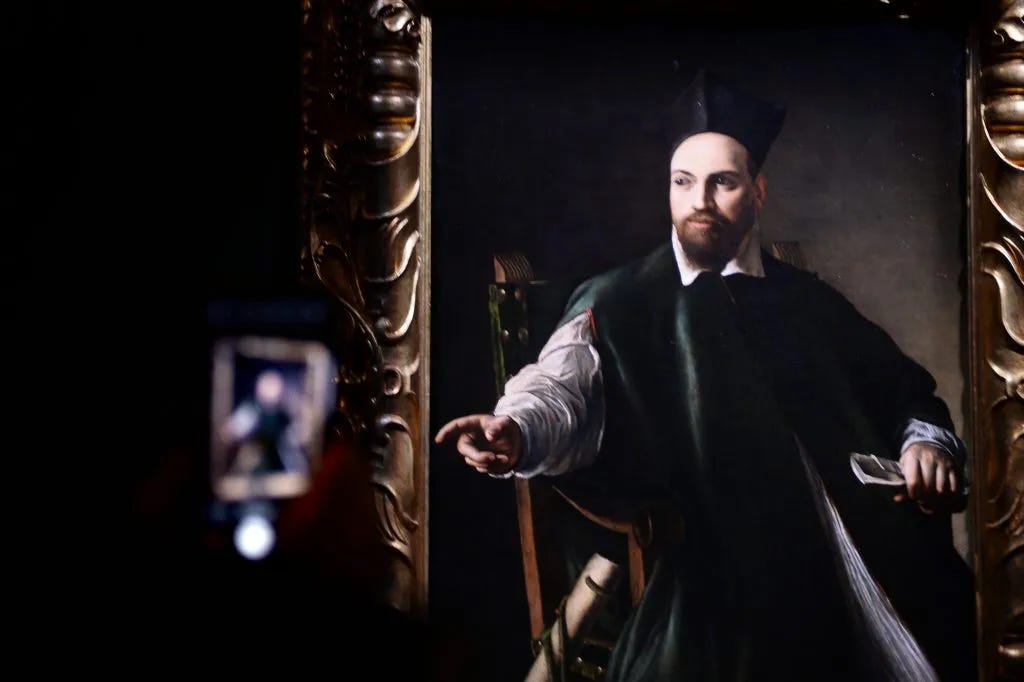
For Italian artists and collectors, the story carries a particular weight. The country that produced Caravaggio, Raphael, and Titian has spent decades watching masterpieces leave its borders. In 2026, it spent €57 million in a single month to bring two works home.
2. The Rubens that hadn’t been seen for 400 years
In 2024, French auctioneer Jean-Pierre Osenat was visiting a property in France when he saw a painting that stopped him where he stood.
It was a depiction of Christ on the Cross - blood running down the side, Jerusalem visible in the background under a rainstorm, the anguish and melodrama that Peter Paul Rubens poured into every treatment of this subject. Osenat later said the moment of discovery would “define my career.”
The painting had been in the same family for generations. It had never come to public attention. And yet it was not unknown to art history - it existed as an engraving, a reproduction of a lost original. What Osenat had found, after examination by specialists, was the original itself. Painted around 1614-15, during the period when Rubens - a later-life convert to Catholicism - was producing devotional works that would define his mature style.
The painting went to auction at Osenat’s house in November 2025. It sold for €2.3 million - approximately $2.7 million. It had not been seen publicly for approximately 400 years.
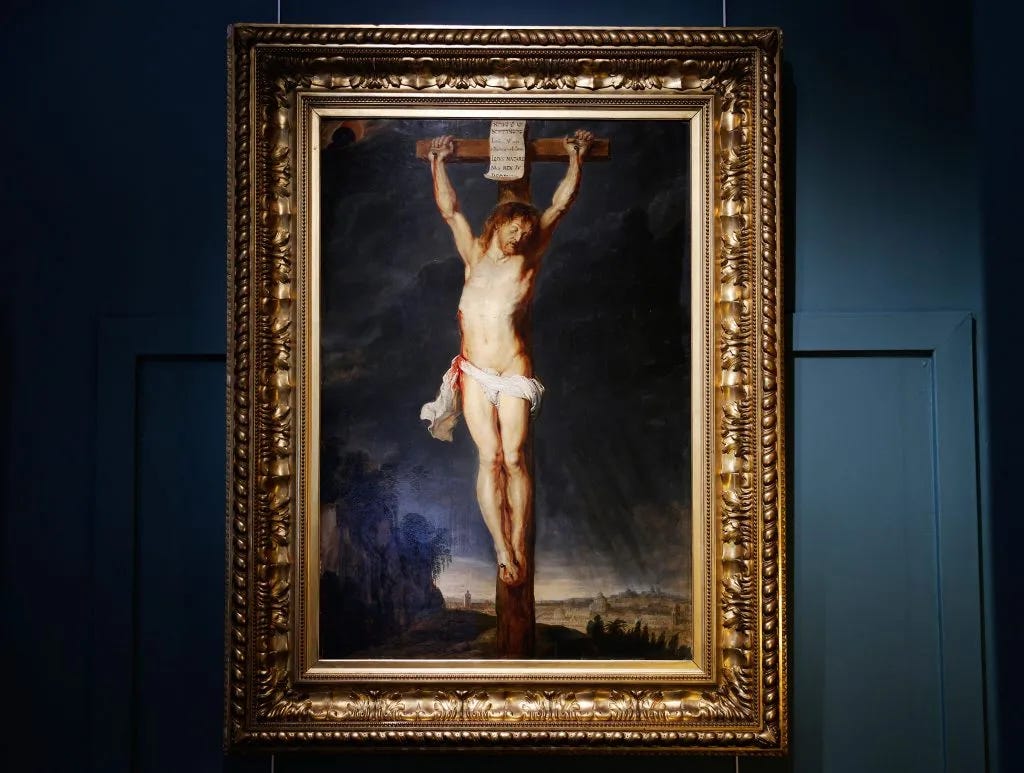
The gap between those two facts is where these stories live. A painting exists. People know it existed - there is an engraving to prove it. But the original disappears into a private collection, passes through generations, becomes part of the furniture of a house, and eventually someone with the right knowledge walks into that house and recognises what they are looking at.
The painting is now in the hands of a buyer who knows exactly what they have. It will not disappear again for 400 years.
3. The painting Google cracked
This story starts where the others end - not in a grand private collection or a family estate, but in a thrift shop in New Jersey.
A painting had sat there for years. Its owner, who had bought it for a modest sum, had never been able to make out the signature. The style was distinctive - expressive, colourful, painted with real authority - but the name in the corner was illegible, and without a name, there was no way to know what it was worth.
In 2025, the owner’s son did what an increasing number of people are now doing with unidentified paintings: he took a photograph and uploaded it to Google Gemini. The AI analysed the image, cross-referenced the visual characteristics against its training data, and suggested a name: the work appeared to share significant stylistic and compositional features with the paintings of a known American artist. It recommended taking the painting to specialist appraisers to confirm.
The appraisers confirmed it. The painting was genuine. It went to auction and sold for significantly more than its owner had ever imagined possible when buying it from a thrift shop.
This story is not included here because the AI got it right - though it did. It is included because it represents something genuinely new in how paintings are identified and valued. For most of art history, attribution required either a paper trail (documents, exhibition records, sale receipts) or an expert eye - and both were expensive and difficult to access. The expert eye required knowing the right people. The paper trail required access to archives.
Google Gemini, used on a smartphone by someone with no art world connections, suggested an attribution that specialist appraisers subsequently confirmed. The tool is not infallible - art historians are careful to note that AI systems can produce convincing but incorrect attributions, and that genuine expertise remains essential for any significant claim. But as a starting point, as a way of flagging that something might be worth investigating further, it is changing the landscape of who gets to ask the question in the first place.
The thrift shop buyer who could not read the signature no longer has to know the right people. They need a phone and a photograph.
What these three stories share
A Caravaggio portrait kept in Italy by state intervention. A Rubens that survived 400 years of obscurity in a French private collection. A thrift shop painting identified by an AI that anyone can access for free.
Three very different mechanisms. Three very different scales. But the same underlying truth: paintings have value that is independent of whether that value is currently known or recognised. The Caravaggio was always worth €30 million. The Rubens was always worth €2.3 million. The thrift shop painting was always worth what it eventually sold for.
What changed in each case was not the painting. It was the knowledge brought to bear on it.
This is the argument at the heart of this series, and it is also the argument at the heart of what Priceyourpainting does. Not every painting in a thrift shop is a lost Rubens. Not every illegible signature conceals a name worth €30 million. But every painting has a value that is knowable - and increasingly, the tools to find that value are available to anyone who is willing to look.
Wondering what your own paintings are worth in the current market? Our AI valuation gives you a market-backed price range for your specific work - free, in under a minute.
References
Long-hidden Caravaggio portrait acquired by Italy for $35 million - Artnet News, March 2026. news.artnet.com
Italy buys Caravaggio painting for about $35 million - AP / ABC News, March 2026. abcnews.com
Italy buys devotional early Renaissance painting for €12 million under art patrimony policy - Euronews, March 2026. euronews.com
Here are 2025’s most unexpected art-historical rediscoveries - Artnet News, January 2026. news.artnet.com
This former arts teacher thought it was a lovely $100 thrift-store portrait - 60 years later Google Gemini exposed the truth - Luxury Launches, June 2026. luxurylaunches.com