The UK contemporary art market and trends - March 2026
The contemporary art market in the United Kingdom as of March 2026 presents a landscape of sophisticated recalibration. Following a period of anxious self-assessment throughout 2024 and 2025, the latest Art Basel and UBS Global Art Market Report 2026 confirms a definitive return to growth.
Global sales rose 4% to an estimated 59.6$ billion in 2025. For the United Kingdom, which remains the world’s second-largest art market with an 18% share, the current momentum is defined by a 2% year-on-year increase in sales to 10.5$ billion. This steady growth is driven significantly by a rebound in public auction activity and a concentration of prestige institutional programming in London.
The market’s current state is best described as one of “measured optimism”. While the speculative peaks of the previous decade have settled, a more stable and predictable environment is emerging. This shift is particularly relevant for emerging and mid-career artists navigating a world where quality, narrative depth, and institutional validation have replaced rapid price appreciation as the primary drivers of collector interest.
As we enter the pre-summer art fair season, the strategic focus for March 2026 centers on “experiences over things” and the ongoing “Great Wealth Transfer,” which is reshaping taste through a new generation of millennial collectors who prioritize meaning over price tags.
The UK’s position in the global ecosystem 2026
The stability of the UK art market at an 18% global share reflects its continued resilience. The recovery is being led from the top, with fine art lots selling for over 10$ million seeing a 30% surge in value during the latter half of 2025. This high-end momentum creates a halo effect for the broader UK scene, yet it masks a challenging reality for the dealer sector, where rising operating costs continue to pressure profit margins despite a 2% rise in aggregate dealer sales.
This environment rewards artists with strong institutional backing. Collectors are increasingly “shopping local,” acquiring art within their home markets to avoid international shipping and tariff complications, which has significantly benefited regional UK galleries and the London primary market.
London: Institutional power and digital evolution
London in March 2026 is witnessing a wave of institutional programming that serves to anchor the market’s aesthetic direction. This period, often referred to as “March Momentum,” acts as a critical bridge between post-winter gallery resets and the major summer fairs.
Prestige programming and market sentiment
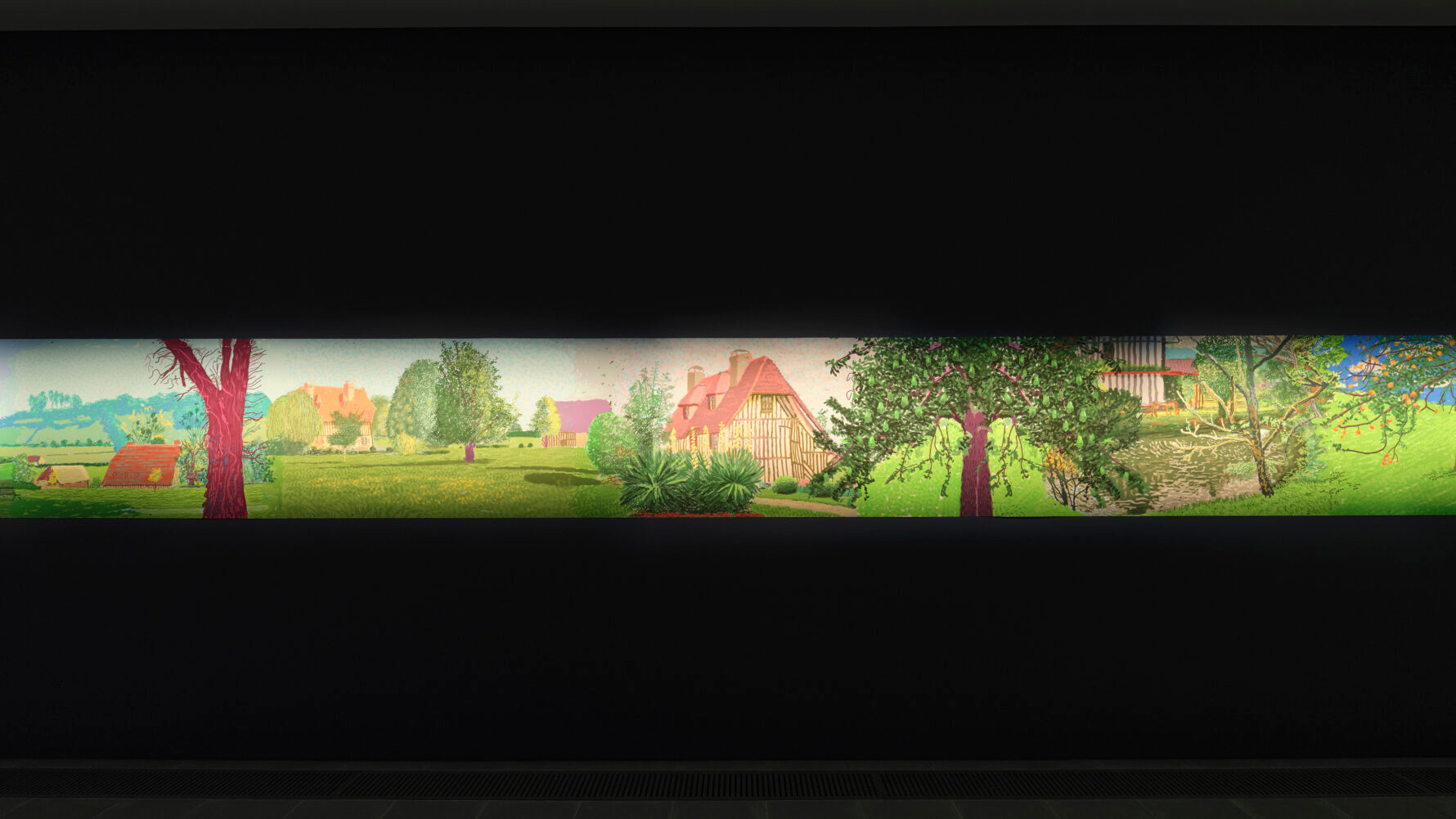
The Serpentine North Gallery’s David Hockney exhibition, featuring his ninety-metre-long frieze “A Year in Normandie,” exemplifies the market’s current fascination with “slow looking” and digital tools used to celebrate traditional landscape traditions. Simultaneously, Tate Britain’s major solo show for Hurvin Anderson, featuring over 60 vibrant paintings that explore the Jamaican-British diaspora, reinforces the market’s shift toward narrative-heavy, figurative work.
The Royal Academy of Arts is also contributing to this resurgence with a significant takeover by Rose Wylie, whose anti-authoritarian intensity appeals to a market looking for “naïve authenticity”. These exhibitions establish a “benchmark of value” that filters down to the primary market, making it easier for collectors to justify investments in emerging artists working in similar stylistic veins.
The rise of the digital gallery model
While online-only sales share dipped to 15% of the total market value as collectors returned to in-person channels, the digital discovery process remains dominant. London galleries are increasingly adopting “hybrid” models where physical presence is supplemented by permanent Online Viewing Rooms (OVRs) and social media engagement. This transparency is vital for mid-career artists trying to build trust in a more disciplined market.
With the London market focusing so heavily on institutional prestige, knowing where you stand is the first step to scaling. Make sure your prices reflect your real-world value.
Regional hubs: Manchester, Bristol, and Glasgow
One of the most profound shifts in the 2026 UK art market is the continued growth and professionalization of regional creative centers. Cities like Manchester and Bristol are leveraging local talent to create sustainable ecosystems that are less susceptible to the volatility of the global blue-chip market.
Manchester: The Open-Air gallery and the Manchester Open
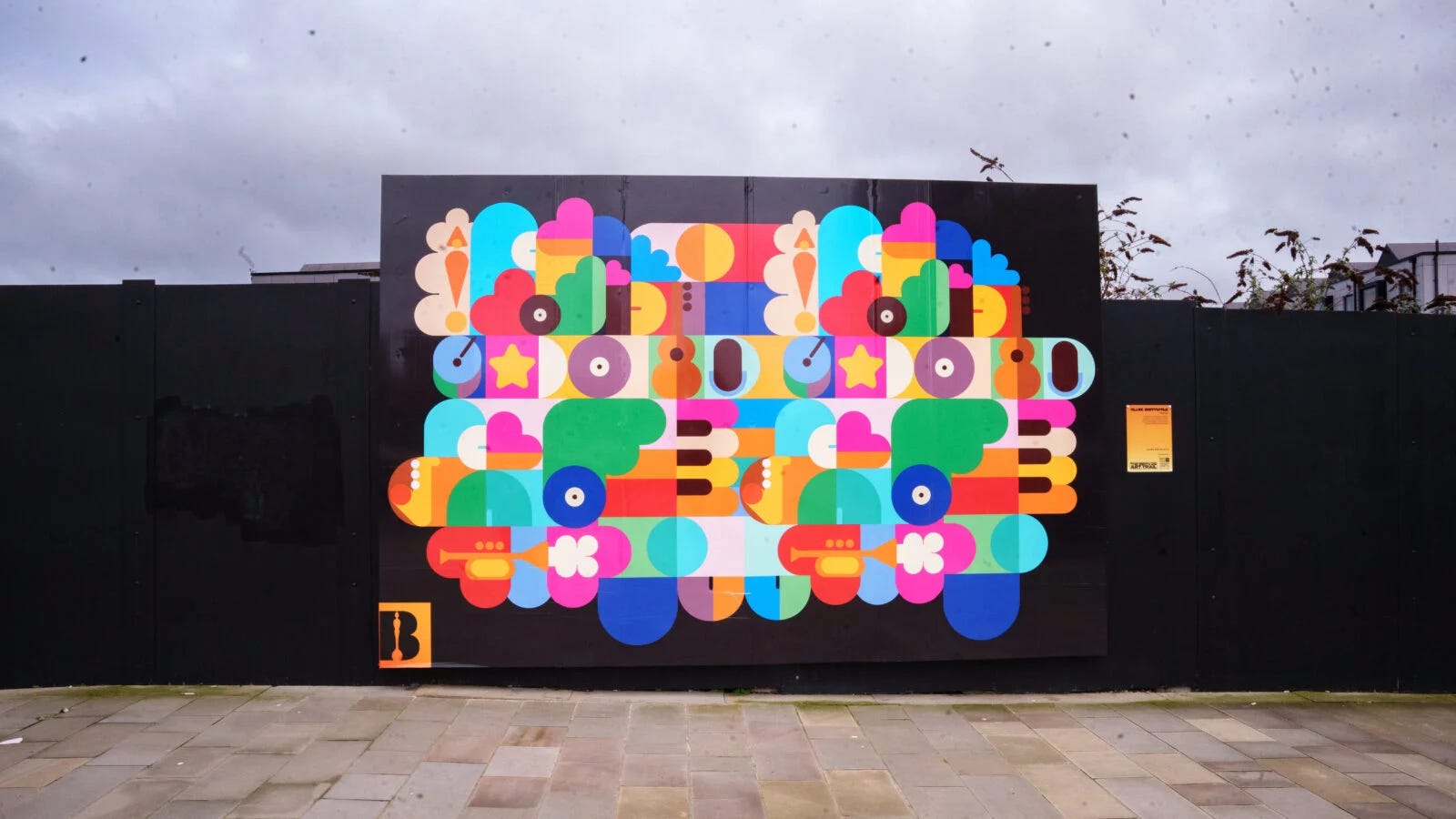
Manchester is currently experiencing a “creative surge” tied to the BRIT Awards 2026. A major art trail featuring 21 North-West artists, curated by Stanley Chow, has transformed the Northern Quarter into a vibrant gallery of murals and installations. Furthermore, the “Manchester Open 2026” at HOME represents the UK’s largest celebration of regional talent, providing a platform for hundreds of artists to sell work across diverse media.
Bristol: Street art capital and innovation
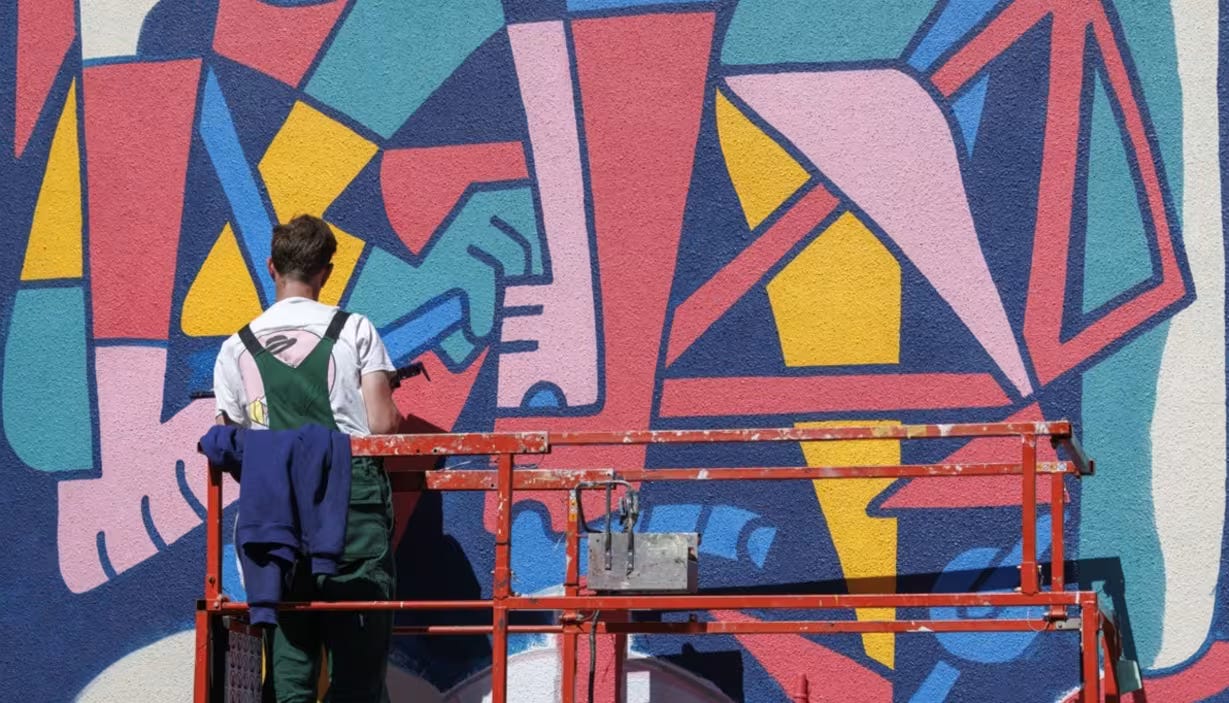
Bristol’s inclusion in Lonely Planet’s 2026 “Best in Travel” list highlights its status as an international art destination. The city’s street art heritage, exemplified by Upfest (Europe’s largest street art festival), is evolving into a more structured market where “urban art” galleries like the Upfest Gallery provide rotating exhibitions of giant abstracts and portraits. Institutional growth is also evident at the Royal West of England Academy (RWA), which is currently hosting “Cosmos: The Art of Observing Space,” a major collaboration between artists and scientists.
Glasgow: Resilience amidst change
The Glasgow art scene is navigating a period of transition following the liquidation of the Centre for Contemporary Arts (CCA) in early 2026. Despite this institutional loss, the city remains a hub for experimental practice. The Tramway continues to host ambitious exhibitions like Rae-Yen Song’s “•~TUA~• 大眼 •~MAK~•” which incorporates live operatic performance and sculptural “instruments”.
Understanding your value across different regions is crucial as the UK art scene decentralizes. Whether you are exhibiting in a Manchester open or a Bristol street gallery, your price should tell a consistent story of your career.
Medium & aesthetic trends: Figurative realism and “The Visible Hand”
In 2026, dominant aesthetic movements are a direct reaction to the “frictionless” production of Artificial Intelligence. Collectors are gravitating toward work that restores “emotional depth” and “individual perspective” through visible human effort.
Resurgence of figurative painting and “Political Realism”
Figurative art continues its rise as artists explore themes of human connection and vulnerability. A specific sub-trend, “Political Realism,” has gained momentum in British painting. This movement focuses on social reality, depicting people of all social classes in situations that reflect modern crises. Catherine Opie’s “To Be Seen” at the National Portrait Gallery serves as a pinnacle of this trend, exploring identity and power structures through photography.
“Naïve Art” and intentional imperfection
The "return of intentional imperfection" remains a vibrant pillar of the 2026 market, with artists like David Shrigley and Rose Wylie celebrated for their raw authenticity. This trend has evolved into Distorted Portraiture, a psychological response to a world of digital filters and self-editing. Rather than pursuing traditional likeness, artists such as Celine Ali, Julie Curtiss, and George Condo distort the human figure to reveal the "instability of contemporary identity," creating a visual truth that many collectors find more "accurate" than realism.
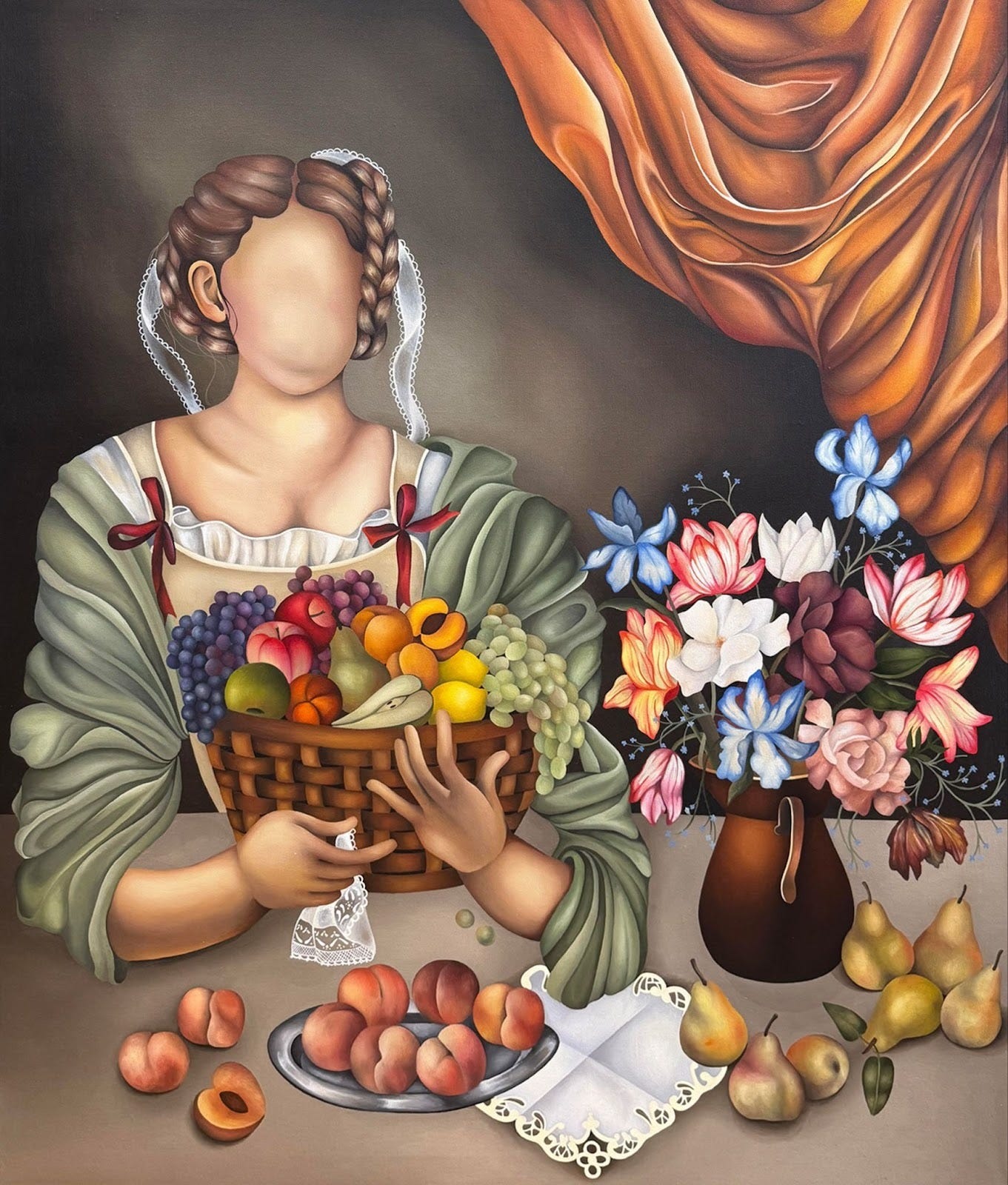
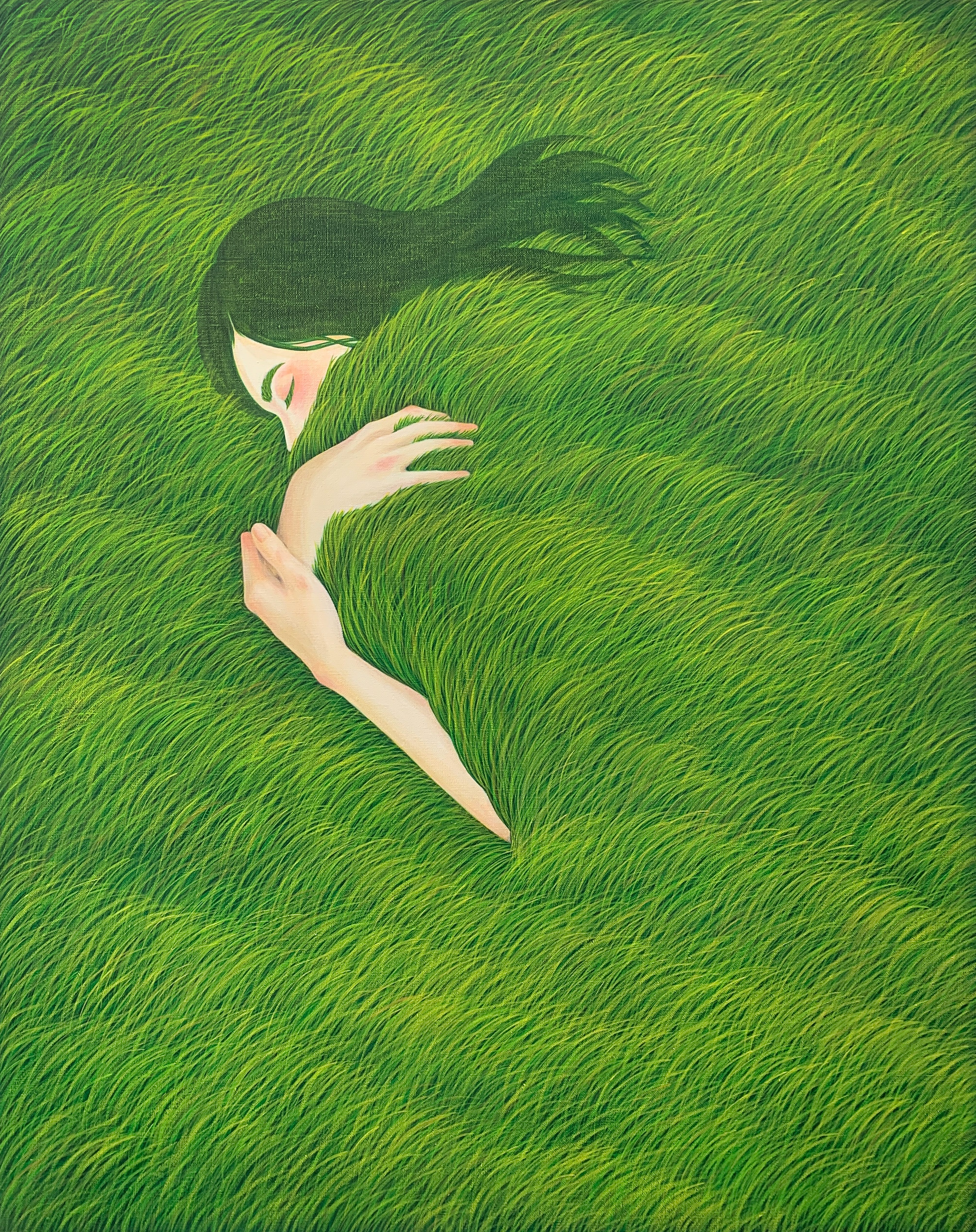
Parallel to this is the rise of Hyperindividualism, where surrealism is built from private mythologies and personal symbols. By constructing inner worlds based on authored narratives, artists like Mulgil Kim and Miriam Dema restore an emotional intensity that machines cannot replicate, marking a market shift toward the unmistakable presence of the human hand.
Large-Scale abstraction and materiality
For those moving away from representation, “immersive-scale” abstraction is thriving. Cecily Brown’s works inspired by Kensington Gardens use “vigorous brushwork” and “vivid color” to create art as environment. Simultaneously, there is a renewed fascination with “matter itself”, texture, assemblage, and the physicality of art. “Chaoticism,” where chaos is used as a creative force for raw emotion, is replacing the overly polished minimalism of the previous decade.
Don’t let your artistic growth outpace your market strategy.
A market recalibrating for authenticity
The UK contemporary art market in March 2026 is a study in selective growth and authentic expression, moving away from speculative hype toward a “measured and constructive” recovery. While global and UK sales have returned to growth, the landscape is defined by a “K-shaped” divide where collectors prioritize institutional validation and the unmistakable presence of the human hand over digital perfection.
London remains the undisputed anchor with prestigious shows from David Hockney and Hurvin Anderson, but the energy in regional hubs like Manchester and Bristol has created a more decentralized and resilient national ecosystem. For the emerging and mid-career artist, this recalibrated market rewards narrative depth, transparency, and a clear-eyed understanding of economic forces. Success today belongs to those who can balance creative intuition with professional clarity, ensuring their work is accurately positioned as the industry enters the high-momentum summer season.
Until next time...thank you for taking the time to read this article.
Made with love by artists, for artists 🫶🏼
Stay connected with us on Instagram for more artist stories and updates!
Stay connected by subscribing to our newsletter and visiting our platform.
Visit Bristol 2026 - Highlights
CCA - Centre for Contemporary Arts - Glasgow
The Art Market Enters 2026 With Renewed Confidence and a Sharper K-Shape Divide
Art Market Outlook for 2026: Navigating a New Landscape
Best art exhibitions in 2026: London - Christie’s
The Art Basel and UBS Global Art Market Report 2026
A round-up of the exciting plans for 2026 across our nine regions…