Art market trends UK, US and Europe: July 2026
Reading time: 7 minutes
The headline number from this month is stark. Christie’s first-half 2026 revenue stands at $4.5 billion, with public auction sales up 71% year-on-year at $3.5 billion. Sotheby’s full-year 2025 total was $7 billion, up 17% from 2024. Christie’s 2025 total was $6.2 billion, up 6%. Two of the world’s largest auction houses have reported consecutive years of growth after a painful contraction in 2023-2024.
The sell-through rate at Christie’s - the percentage of lots that actually sold - was 91% in H1 2026, up from 87% in H1 2025. A sell-through rate above 90% is a strong market signal. It means collectors are bidding with confidence and sellers are pricing realistically.
For emerging artists based in the UK, the US, and Europe, these numbers carry specific relevance. The London market is recovering faster than New York, and the collector base driving that recovery increasingly overlaps with the buyers who attend Frieze, the Affordable Art Fair, and regional gallery shows. For US artists, strong auction results signal renewed collector confidence that filters down through the price tiers. For Italian and European artists, the Paris fair resurgence and the European emphasis of the key H1 sales confirm that continental collector appetite is genuinely strengthening.
What drove the H1 results
The single largest event of the first half was the Lewis collection sale in London in June, which totalled $406.2 million - the highest value sale of Impressionist, Modern, and contemporary art ever staged in Europe. That number is skewed by several exceptional lots, but the significance is not just the total: it is that London hosted the record-breaking sale, not New York. European collector confidence has recovered meaningfully.
20th and 21st-century art dominated: $2.3 billion at Christie’s alone, up 79% on 2025. Luxury goods - watches, jewellery, memorabilia - continue to attract new buyers to the auction ecosystem, with Christie’s reporting $539 million in luxury sales up 15%. The Jim Irsay collection of American memorabilia totalled $105.2 million across five auctions finishing on 6 July - the highest sale total ever for a memorabilia collection.
The pattern underneath these headline numbers is the one that has defined 2026: flight to quality. Impressionist art rebounded 149% year-on-year in 2025. Modern art strengthened 35%. Contemporary and young contemporary works fell below their estimates on average - a softening in the sub-$1 million segment that accounts for 94% of all auction transactions.
This is the nuance that matters most for emerging artists: the market is strong at the top and growing at the accessible base, but the middle - the $500,000 to $2 million range - is still stabilising. Art Basel 2026 in June confirmed this K-shaped structure clearly: the accessible segment between $25,000 and $150,000 is among the strongest market segments, while the mid-range continues to navigate recovery. That accessible segment is exactly where most emerging and developing artists operate.
The UK market: London leads Europe again
For UK-based painters, the summer market carries specific signals worth reading carefully.
London’s dominance of the H1 results is not incidental. The Lewis collection sale - staged at Christie’s King Street - confirmed that European collector capital continues to flow through London even in a period of political and economic uncertainty. The 91% sell-through rate means that the works that came to auction found buyers, which is the most direct measure of collector appetite available.
The practical implication for UK emerging artists: the collector base that drove those results is not sealed off from the lower price tiers. Flight to quality at the top generates attention for quality throughout the market. A collector who spends £500,000 on a Bacon at Christie’s does not stop buying art when they leave the saleroom. They buy at art fairs, through galleries, and increasingly through direct online platforms. The confidence that produces a 91% sell-through rate at Christie’s King Street eventually manifests as activity in the sub-£5,000 market that most UK emerging artists actually inhabit.
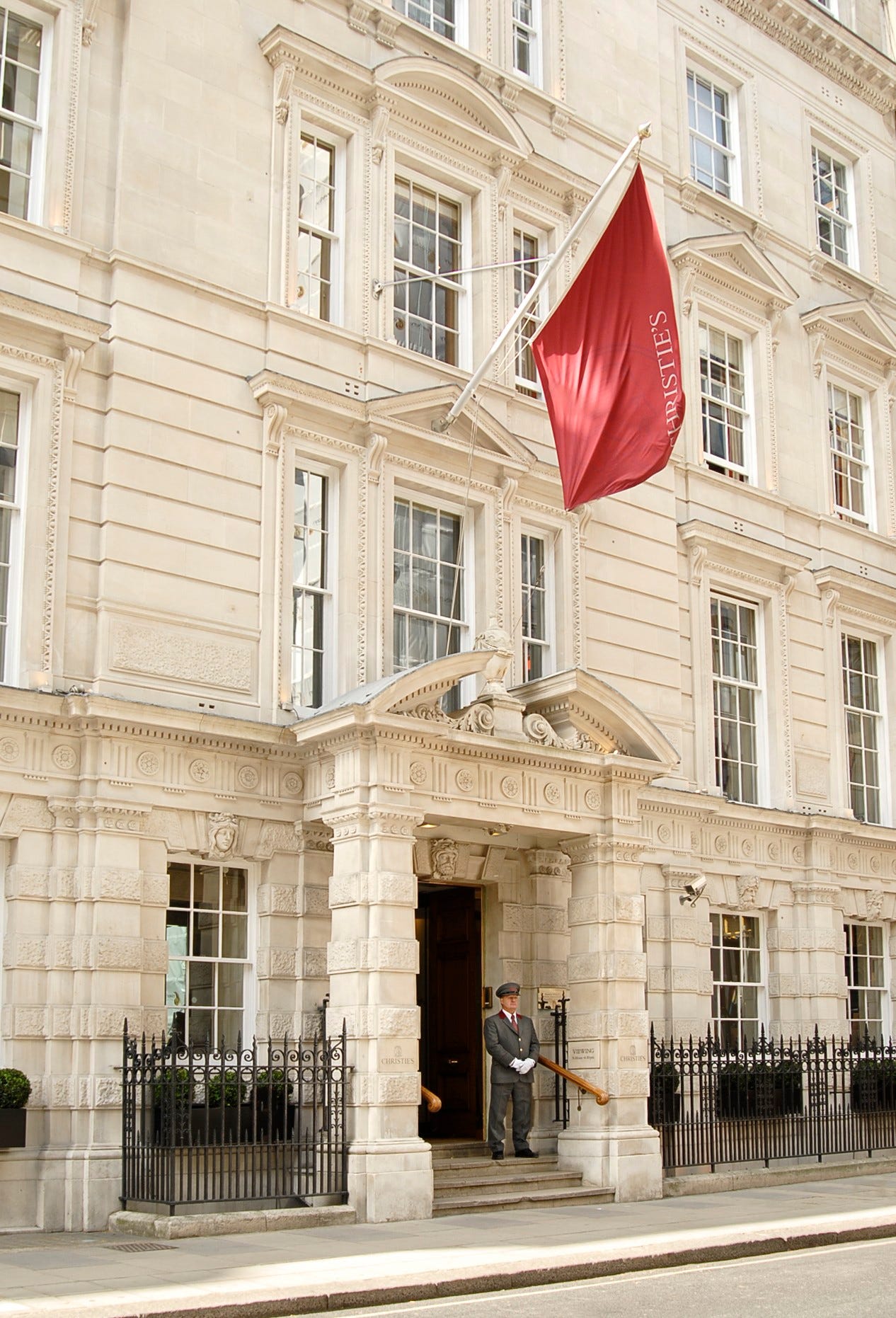
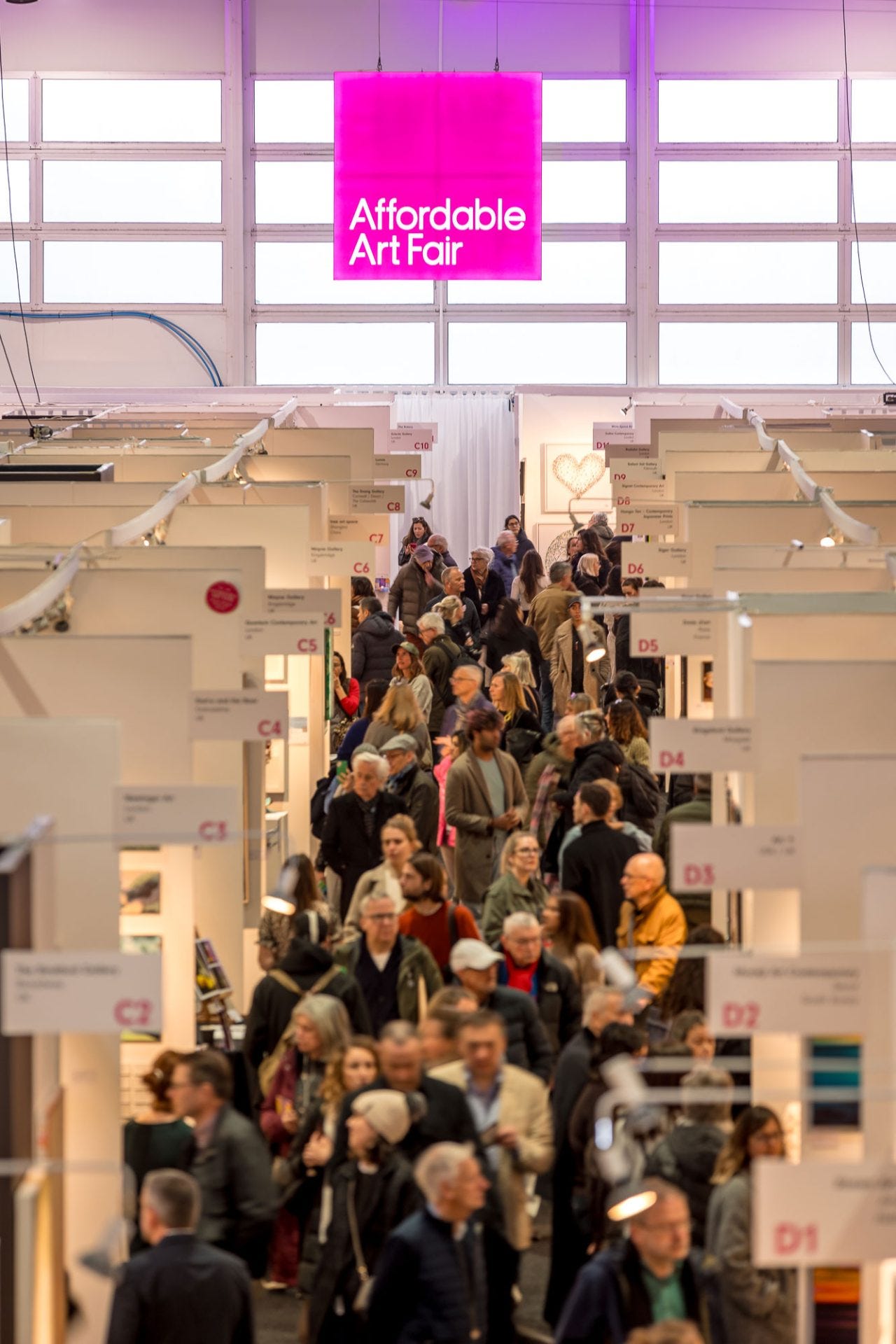
Two events will shape the UK autumn market: Frieze London opens in early October, with programming announcements typically made in August and September. The Frieze selection is a leading indicator of which emerging artists will see price movement in Q4. And the Affordable Art Fair returns to Battersea in October - historically the most important commercial event of the year for UK emerging artists selling directly to collectors.
The US market: expanding at the base
The US market tells a different story from the UK in 2026 - and in some ways a more encouraging one for emerging artists.
The number of artists represented at US auctions grew from 2,717 in 2015 to 3,315 in 2025. Works priced under $50,000 made up 61% of all lots sold in 2025, significantly higher than the pre-pandemic average of 48%. The New York market is expanding at the base, with more artists and more accessible price points than at any point in the last decade.
This expansion has a specific driver: a new generation of collectors. Younger US collectors - Millennials and Gen Z - are entering the market with different priorities from previous generations. They are more likely to buy directly from artists online, more willing to purchase from emerging practitioners without gallery representation, and more drawn to work that reflects contemporary concerns. When Christie’s Augmented Intelligence AI art auction attracted 37% first-time buyers in February 2025, it signalled something about the US collector demographic that is relevant far beyond the AI art category: new buyers are active and accessible.
The headwind for US emerging artists is the same one facing the UK: the K-shaped market structure means that while the base is expanding, mid-tier galleries - those showing emerging and developing artists - remain under pressure. A number of high-profile gallery closures in the US in 2025 and 2026 have affected the support infrastructure for emerging artists. The direct implication: an emerging US artist relying on gallery representation for market access is more exposed than one who has built direct collector relationships alongside any gallery work.
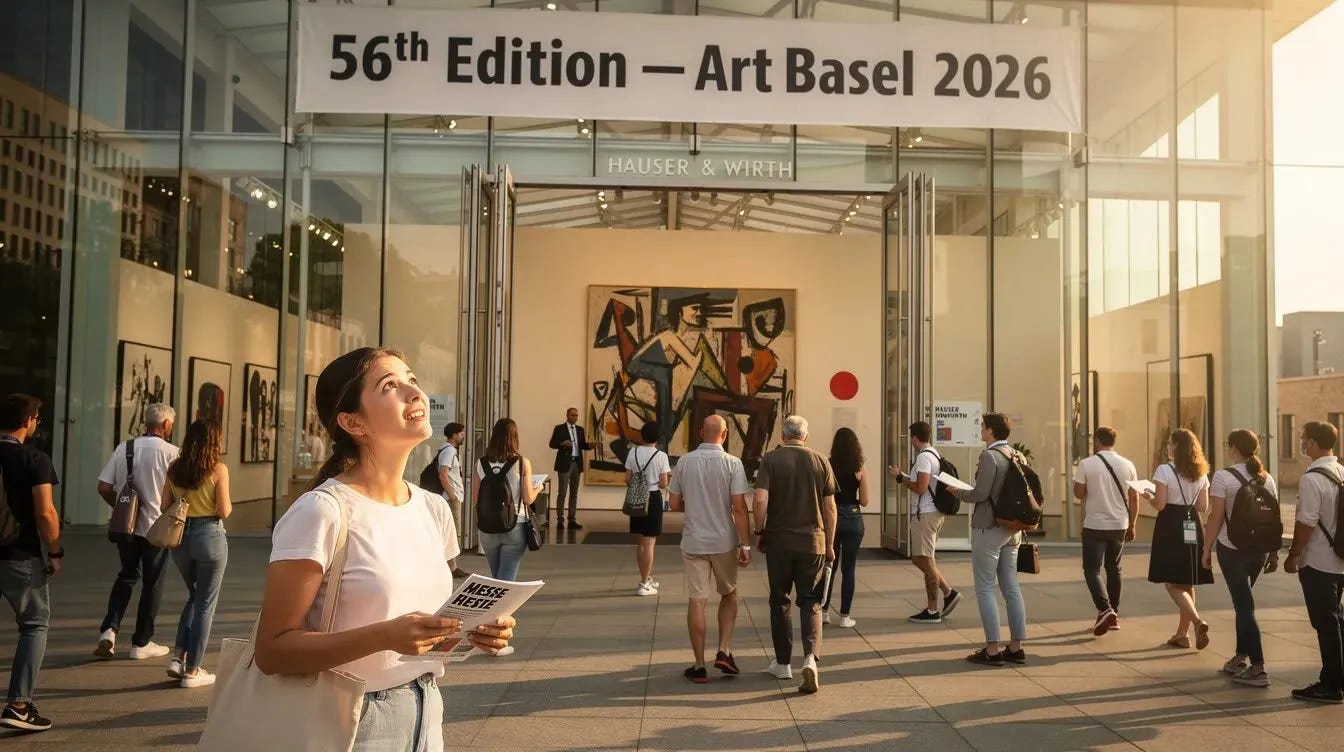
Phillips concluded its Modern and Contemporary Art sale in New York on 16 July. Sotheby’s Contemporary Discoveries ran 7-14 July in New York. Summer results from these sales will be publicly available on Artnet within days of close - a direct window onto what US collectors are currently willing to pay for contemporary work at accessible price points.
The Italian and European market: Milan and Paris gaining ground
For Italian artists, and for European artists more broadly, the 2026 market is producing specific signals that matter.
Sotheby’s Italian calendar centres on its Milan operations, running modern and contemporary art sales each spring (May) and autumn (November), with additional online sales throughout the year. The spring 2026 Milan sale focused on Italian and international contemporary artists drawn from distinguished private collections. Milan’s position as the commercial and cultural capital of Italy’s art market - energised by miart in April and a growing network of collector spaces - makes it the most important auction destination for Italian contemporary work.
The European picture more broadly is being reshaped by the rise of Art Basel Paris (formerly FIAC) as a counterweight to Frieze and Basel. Sotheby’s holds sales in Paris across multiple categories, and the Parisian fair season - culminating in October - is drawing collectors from across the continent who previously concentrated their attention on London and Basel. For UK artists with gallery relationships in France or Italy, and for Italian artists looking to reach European collectors beyond Italy, the Paris autumn season represents an increasingly important market moment.
The Italian collector base has specific characteristics worth noting. Italian collectors tend to favour artists with clear provenance and exhibition history in recognised Italian institutions. A UK or US artist with no Italian exhibition record will find it harder to access Italian collectors than an Italian artist with a documented CV. Conversely, an Italian artist who has shown in London or at Art Basel Statements - the emerging artist section of Art Basel - will find their international credibility translates directly into Italian market positioning.
What the summer data means at accessible price points
All of the above concerns the institutional and auction market. The more relevant question for most emerging artists is what this means at the price points they actually operate at.
The data is encouraging. The $25,000 to $150,000 segment is identified as one of the two strongest zones in the current market. Below that, in the sub-$10,000 range where most emerging artists sell, the expansion of the collector base - more buyers, younger buyers, buyers operating across multiple platforms and markets - is the most significant structural development of the last three years.
Small-scale paintings under 40 square inches saw a 66% purchase increase in 2025, representing 40% of all art purchases. This is not a trophy market trend - it is a grassroots collector trend, driven by the same digital-fatigue dynamics that are bringing buyers back to handmade originals and away from AI-generated imagery. Collectors want objects. They want things that cannot be replicated with a prompt. They are finding them across all three markets - UK, US, and Italy - and they are paying for them.
The collectors who cannot bid on a Bacon or a Kossoff at Christie’s in November will be attending the Affordable Art Fair in October, browsing Saatchi Art in August, and buying directly from artist Instagram accounts in between. The confidence that produces a 91% sell-through rate at the top filters down. It takes time. But it filters.
Know where your paintings sit in this market. Our AI valuation uses real recent sales data to give you a market-backed price range for your specific work - in the UK, the US, or across Europe.
References
Christie’s and Sotheby’s 2026 half year results: trophy lots and luxury goods fuel rebound - The Art Newspaper, 15 July 2026. theartnewspaper.com
Art market spring update 2026 - Bank of America / Merrill Lynch, April 2026. privatebank.bankofamerica.com
Art Basel 2026: a market rejuvenated and ready for collectors - LLB Auction Blog, June 2026. llb-auction.com
The 2026 art market, in 20 signals: what the numbers aren’t telling you - The Art Bystander, July 2026. theartbystander.substack.com
What Artnet Auctions specialists can’t stop thinking about this month - Artnet News, 16 July 2026. news.artnet.com
Modern and contemporary art auction - Sotheby’s Milan, May 2026. sothebys.com
AI art is selling for millions: so why are collectors buying handmade again? - UC Strategies, February 2026. ucstrategies.com
Made with love by artists, for artists.
Stay connected with us on Instagram for more artist stories and market updates.