Art market trends UK, US and Europe: October 2026
At the top of Frieze Masters, a flower painting from around 1607 sold for a reported £5 million. At the other end of the range, a north London gallery sold its entire stand, priced from £2,000, by the end of the VIP day. Same week, same park, same market.
This edition covers the three markets in the title: the UK, the US and Europe. It draws on this autumn’s reporting: Frieze week, London’s auctions, the Christie’s and Sotheby’s first-half results, Artprice’s survey of the year to June, and the Art Basel and UBS report. Then we turn it into something you can use if you paint.
One caution first. The Frieze sales are reported by the dealers themselves, not audited totals, as Artsy points out. Auction figures come from the houses and from Artprice.
UK: Frieze week, from £5 million to £2,000
On Art Basel and UBS’s count the UK is the world’s second largest market: $10.5 billion in 2025, 18% of global sales, up 2%. Artprice, which counts auctions only, ranks it third.
The top: one headline sale and a few sold-out booths
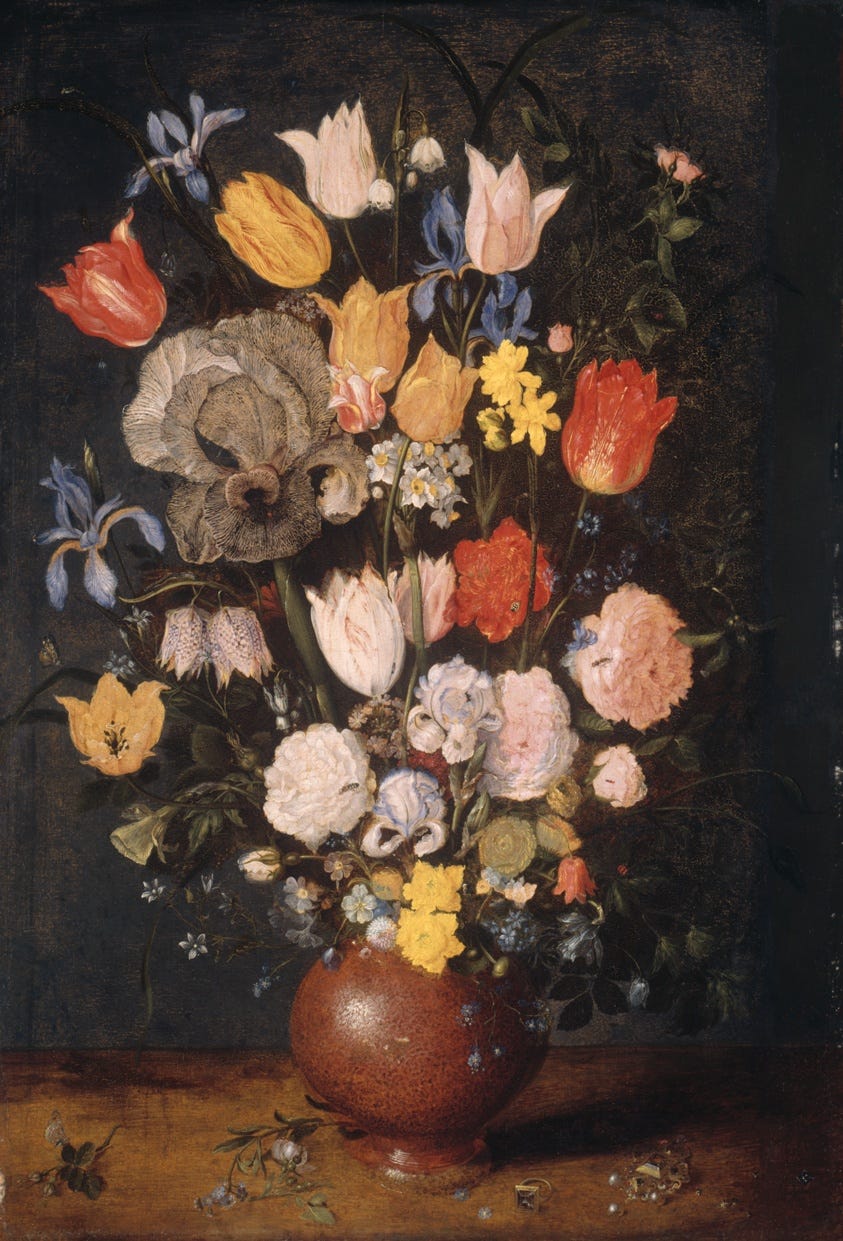
Hauser & Wirth placed Jan Brueghel the Elder’s “Still Life of Flowers in a Stoneware Vase” (about 1607 to 1608) for a reported £5 million or so. Gagosian sold all six of its recent Albert Oehlen paintings, which Ocula reports had asking prices of about €1.2 million each, though the gallery published no prices.
The fair says 95,000 visitors came from 108 countries and regions, with delegates from 426 institutions, and Iwan Wirth told Artlyst he had never seen London so busy. London’s auctions were strong too. Puck’s Marion Maneker counts $438 million across the three main contemporary houses last week, up 68% on a year earlier by his count. More than a third came from one collection, Peter Simon’s, so it tells you more about one seller than about the whole market.
For a sense of what a flower still life of this period looks like, the Art Institute of Chicago holds “Bouquet of Flowers in an Earthenware Vase”, attributed to Jan Brueghel the Elder and dated about 1610. It is a different picture from the one that sold.
The middle: where most work changed hands
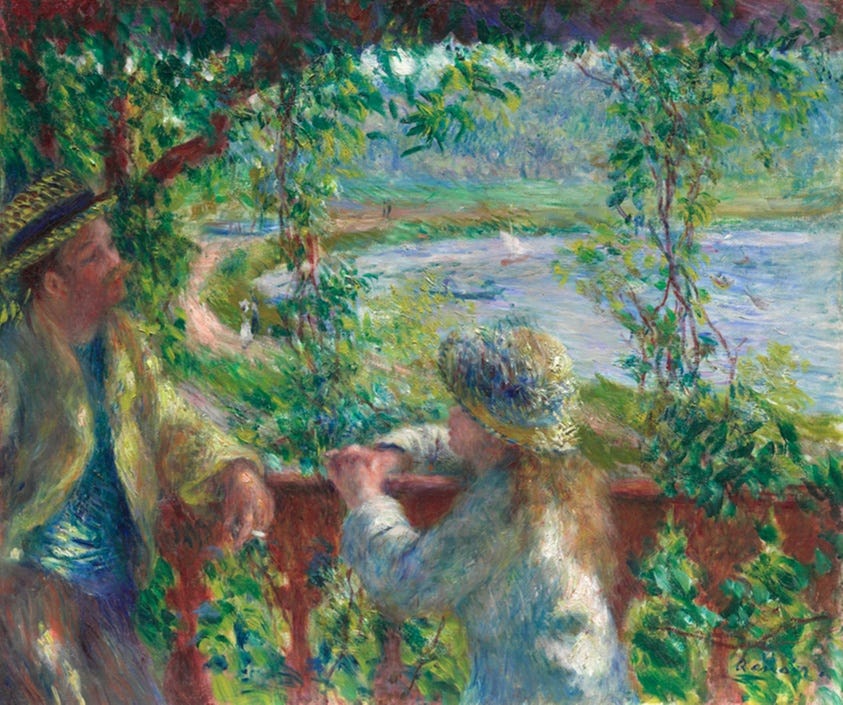
Ocula reports that most mid-market sales on day one were between £50,000 and £250,000, and a slim majority were under £50,000. It was not a sell-out everywhere: the adviser Nico Epstein told Artnet that demand sits in “heat pockets”. Artsy adds that a Pierre-Auguste Renoir landscape (about 1897) sold with the dealer Bastian. The Art Institute of Chicago’s “Near the Lake” (1879 to 1880) shows his landscape work from earlier in his career.
The bottom: paintings from £2,000 to £10,000
This is the part that matters most if you sell your own work. The Art Newspaper reports that Harlesden High Street, a north London gallery, sold its entire stand of Marcus Jefferson works, priced at £2,000 to £8,000, by the end of VIP day. They are text-based prints and sign-like pieces, not paintings, but the price point is the lesson. For paintings, Artlyst’s dealer report lists five Yvette Coppersmith paintings at £5,000 to £10,000 and several Kaye Brown paintings at £4,000 to £9,000 (both Sullivan+Strumpf), and two Emily Kraus paintings at £45,000 each (The Sunday Painter).
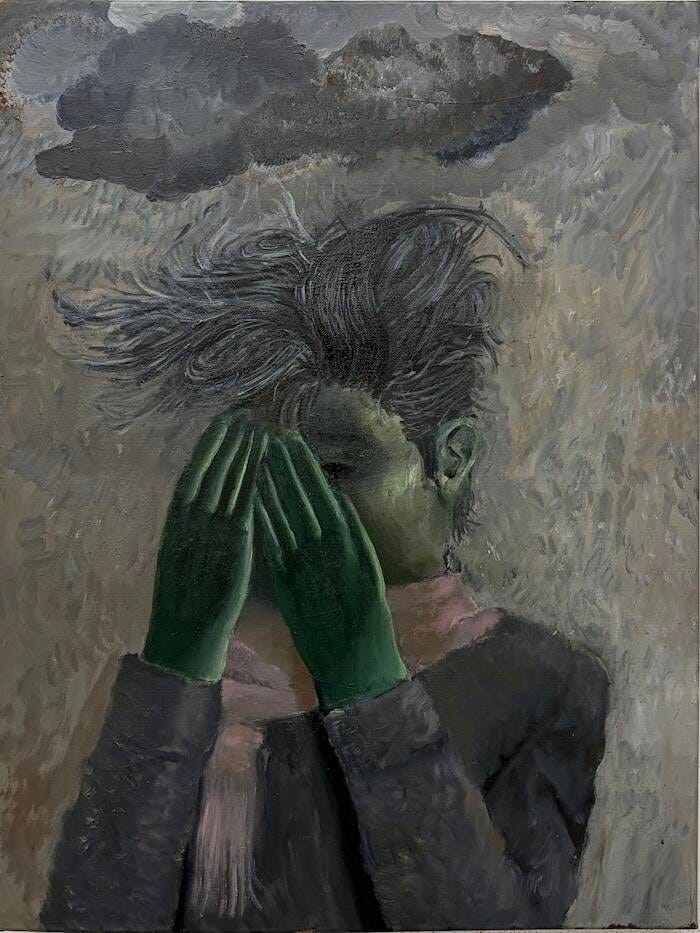
Frieze’s own list of ten artworks under £10,000 included Ahn Jisan’s oil on canvas “A Day of Cloud and Wind” (2026), priced under $5,000 at Johyun Gallery. The list shows asking prices, not confirmed sales.
US: a strong top, a harder start for the young
The US is the largest market by a wide margin: $26.0 billion in 2025, 44% of global sales and up 5%, according to Art Basel and UBS. 2026 has been stronger still at the top. Artlyst reports that Christie’s first-half public auction sales were $3.5 billion, up 71%, with 91% of lots sold, and Sotheby’s $3.4 billion, up 59%, with 90% sold. Both are worldwide figures, not US-only.
Artprice’s survey of the year to June 2026 says contemporary auction sales rose 6% after three years of decline, and that all of the roughly $100 million increase was recorded in the US. The same release says the segment for artists under 40 fell 26.6%. Christie’s chief executive Bonnie Brennan told Artlyst that “where estimates got pushed, bidding was thinner.”
Europe: France and Switzerland up, Germany down
The EU market reached $8.4 billion in 2025, up 3%. France was $4.5 billion, 8% of global sales, up 9%. Spain rose 6%, and outside the EU, Switzerland and Austria both rose 13%. Germany fell 10% and Italy fell 2%. Artprice’s auction count agrees on France: sales value up 22% and transactions up 18% in the year to June 2026.
In Italy, Finestre sull’Arte reported from Arte Fiera Bologna in February that sales were often under €10,000. Work from about €7,000 to €10,000, often by young or mid-career artists, sold well, while museum-level pieces at €200,000 to €500,000 largely did not sell.
The next test is Paris. Art Basel Paris runs 23 to 25 October at the Grand Palais, with preview days on 21 and 22 October and 211 exhibitors from 41 countries and territories. The adviser Philip Hoffman told The Art Newspaper that “the serious money is going to Paris”.
Across all three: careful, younger, closer to the artist
More careful. The adviser Lucy-Anne Garnett told Ocula that collectors are more price-sensitive and better informed, and want evidence of real value, especially in the primary market.
Younger. Brennan says 47% of Christie’s new clients in 2026 are Millennials or Gen Z, and Ocula notes dealers see Gen Z emerging as a buying force.
Closer to the artist. Art Basel’s August collector survey found that buying directly from artists (studio visits, Instagram, commissions) more than tripled as a share of high-net-worth collectors’ spending, reaching 20%.
Primary galleries are still under pressure. Pace cut 50 artists from its roster, Ocula reports, and The Art Newspaper says Stephen Friedman Gallery, which closed at the start of the year, owed creditors £7.8 million, including more than £800,000 to artists. For emerging painters, representation is harder to win and your own records and direct sales matter more.
What to take from it if you paint
Three lessons carry straight to your own pricing:
Evidence beats ambition. Buyers are asking for proof. A clear price logic, a dated sales record and the same price on every channel are your proof.
Accessible does not mean cheap. The entry-level successes were work at reachable prices, not discounts. Price to a method, not to fear. Our guide to how to price your art as an emerging artist walks through one.
Document everything. Keep dated photographs, titles, sizes, mediums and sales, and get consignment terms in writing, so you can answer a collector or gallery in minutes.
If you want to see where an original painting of yours sits, our free tool gives you a price range in about 30 seconds. It is a guide to the market, not a formal appraisal. Run it with your latest sizes and sales, and save the range with the date.
P.S. What did you notice at Frieze, in person or online, that the reports missed? Hit reply. I read every answer. Next Tuesday: we go inside another painting.
References
Jo Lawson-Tancred, Artnet News, “$6.5M Jan Brueghel Sells at Frieze in London as Collectors Compete for Coveted Works”, 14 October 2026 (updated 15 October): https://news.artnet.com/market/frieze-london-masters-2026-report-2823838
Ocula Magazine, “Despite ‘Time-Poor’ Collectors, Frieze London Brings Strong Sales for Galleries of All Sizes”, 15 October 2026: https://ocula.com/magazine/art-news/frieze-london-strong-sales-collectors-galleries/
Artlyst, “Frieze 2026 Report: What Sold And What The Dealers Had To Say”, October 2026: https://artlyst.com/frieze-2026-report-what-sold-and-what-the-dealers-had-to-say/
FAD Magazine, “Frieze London & Frieze Masters report strong sales and record institutional attendance”, 19 October 2026: https://fadmagazine.com/2026/10/19/frieze-london-masters-2026-sales-results/
The Art Newspaper, “At Frieze London, some buyers are taking risks, others are taking their time”, 15 October 2026: https://www.theartnewspaper.com/2026/10/15/frieze-london-buyers-taking-risks-others-are-taking-their-time
The Art Newspaper, “Artists impacted by Stephen Friedman gallery closure out in force at Frieze London”, 15 October 2026: https://www.theartnewspaper.com/2026/10/15/artists-impacted-by-stephen-friedman-gallery-closure-out-in-force-at-frieze-london
Artsy, “$6 million Jan Brueghel the Elder painting leads sales at Frieze London and Frieze Masters 2026”, 14 October 2026: https://www.artsy.net/article/artsy-editorial-6-million-jan-brueghel-elder-painting-leads-sales-frieze-london-frieze-masters-2026
Marion Maneker, Puck, “London’s Art Auctions Hit $438M, So Why the Gloom?”, 18 October 2026: https://puck.news/londons-art-auctions-hit-438-million-dollars-so-why-the-gloom
Artlyst, “Christie’s And Sotheby’s Post Sharp Recovery In First Half Of 2026”, 16 July 2026: https://artlyst.com/christies-and-sothebys-post-sharp-recovery-in-first-half-of-2026/
Artprice, 33rd Annual Contemporary Art Market Report for 2026 (period 1 July 2025 to 30 June 2026), press release, October 2026: https://www.prnewswire.co.uk/news-releases/artprice-releases-its-33rd-annual-contemporary-art-market-report-for-2026-record-transactions-price-trends-the-balance-of-market-power-and-artists-from-the-global-south-302901554.html
Art Basel, collector survey article, 14 August 2026: https://www.artbasel.com/stories/art-basel-report-2026-collectors-experiences
Giacomo Nicolella Maschietti, Finestre sull’Arte, on Arte Fiera Bologna 2026, 8 February 2026: https://www.finestresullarte.info/de/stellungnahmen/arte-fiera-bologna-2026-der-inlandsmarkt-als-moglicher-horizont-umsatz-unter-10k
The Art Basel and UBS Global Art Market Report 2026 (Arts Economics), regional figures for 2025: https://www.artbasel.com/stories/the-art-basel-and-ubs-global-art-market-report-2026
Art Basel, “Art Basel Paris 2026 gallery list announcement”: https://www.artbasel.com/stories/art-basel-paris-2026-gallery-list-announcement
Art Institute of Chicago, artworks 64029 and 95654: https://www.artic.edu/artworks/64029 and https://www.artic.edu/artworks/95654
Made with love by artists, for artists 🫶🏼
info@priceyourpainting.com | www.priceyourpainting.com | Instagram