Frieze London 2026: what emerging artists need to know
Frieze London opens to the public on Thursday 15 October, and you do not need a gallery, a collector or a ticket-day plan to learn something useful from it. For an artist who is still building a name, a big fair is a free education in how work is presented, priced and sold.
This guide covers the practical facts first, then where emerging artists actually appear at the fair, then how to use it whether or not you can get to Regent’s Park.
What is Frieze London?
Frieze London is a contemporary art fair. It was founded in 2003 by Amanda Sharp and Matthew Slotover and takes place every October in The Regent’s Park, London. It shows work by living artists, presented by galleries that come from around the world to show and sell to collectors, curators and the public. The 2026 edition brings together 172 galleries from 42 countries and regions.
Alongside it runs Frieze Masters, in the same park, which covers historical work made before the year 2000 and adds nearly 140 more galleries. Frieze says the two fairs together have drawn over 90,000 visitors a year in recent years, from art-world professionals to the general public. The same organisation also runs fairs in Los Angeles, New York, Seoul and Abu Dhabi, and Frieze Sculpture, a free outdoor exhibition in the park.
Frieze London 2026: dates, venue and tickets
Frieze London and Frieze Masters run side by side from 14 to 18 October 2026 in The Regent’s Park. Frieze London is in the south of the park, with its entrance off Park Square West. Frieze Masters is on Gloucester Green, near London Zoo, and a free shuttle bus links the two roughly every 15 minutes.
Wednesday 14 October is invitation only. General admission begins on Thursday 15 October, after a members and invitation preview from 11am to 1pm, and Frieze London closes at 5pm that day. It then opens 11am to 7pm on Friday and Saturday, and 11am to 6pm on Sunday. Tickets are sold only online at frieze.com and are tied to a date and time, with no re-entry on general admission tickets. Check the site for current prices.
Frieze says the 2026 edition of Frieze London brings together 172 galleries from 42 countries and regions, with Frieze Masters adding nearly 140 more. The fair was founded in 2003 by Amanda Sharp and Matthew Slotover and, by Frieze’s own account, draws more than 90,000 visitors a year across both fairs, from curators and critics to collectors and the public.
Where emerging artists appear at Frieze London
The main galleries section is open to commercial galleries of any age. The sections below are the ones built around newer names.
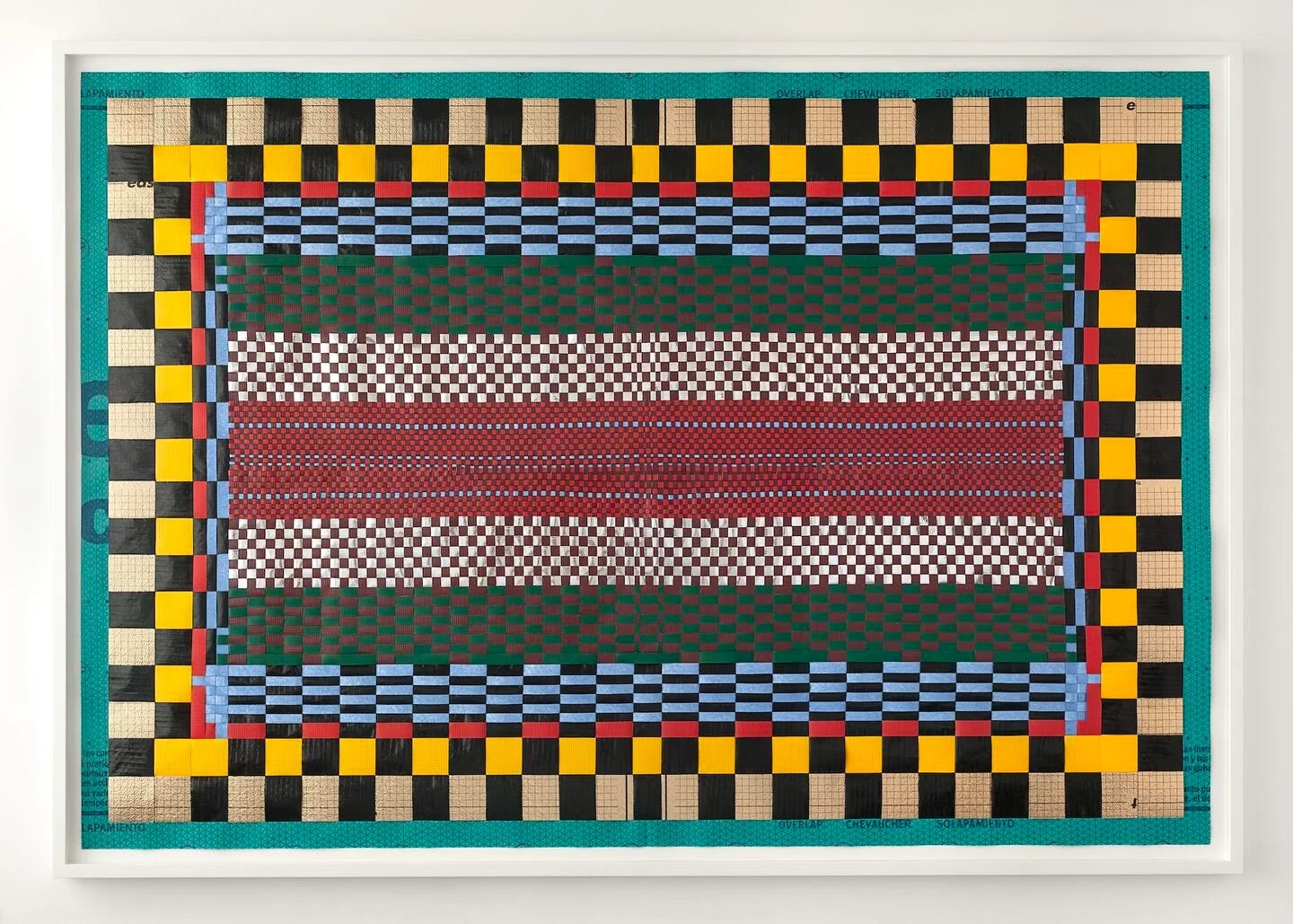
Artist-to-Artist. Seven solo presentations, each nominated by an established artist who champions a peer. This year’s pairings include Caroline Monnet, nominated by Jeffrey Gibson, and Unathi Mkonto, nominated by Yinka Shonibare. It is a useful model: an artist recommending another artist is one of the oldest forms of career help, and it works without a gallery in the middle.
Focus. This section, supported by Stone Island, is for younger international galleries, defined by Frieze as those founded within the last twelve years. This year it includes seven new galleries and 28 returning ones, with advice from curators Cédric Fauq, Joumana Asseily and Freddie Powell. Since 2023 it has featured 136 galleries across 246 presentations.
The Code Universe. A new section curated by Carol Yinghua Lu, with eight presentations looking at how mass culture and consumer goods reflect social change.
Editions. A section for limited-edition work. As ever with prints and editions, these are a different market from original paintings, so treat the prices as a guide to editions only.
Frieze also runs prizes and fellowships alongside the fairs, including the Nicoletta Fiorucci Foundation Prize and the Frieze x Deutsche Bank Emerging Curators Fellowship.
If you cannot get to the park
You can still see a lot of Frieze without buying a ticket.
Frieze Viewing Room London, online from 7 to 23 October, lets you browse galleries’ presentations from your phone.
Frieze Sculpture is a free outdoor exhibition in The Regent’s Park English Gardens, running from 16 September to 1 November. This year it shows 11 international artists, curated by Fatoş Üstek.
Gallery walks run during Frieze Week, including a West End Day on 17 October.
What the market is doing around the fair
Fairs do not happen in a vacuum. The Art Basel and UBS Global Art Market Report 2026, which covers 2025, put global sales at $59.6 billion, up 4% after two years of decline and still below the 2022 peak. The UK is the second largest market, with sales of $10.5 billion and an 18% share, behind the United States.
The detail matters more than the headline for emerging artists. Sales of works above $1 million rose 21% in value, while auction sales of works under $50,000 fell 2% in both value and volume. In plain terms, the top of the market is strong while the under-$50,000 tier, where many emerging artists sell, is under pressure. That is a good reason to make your pricing clear and consistent and to document every sale.
How to use a fair to learn about pricing
You do not need to buy anything to use Frieze as research. Here is what to look for.
Read the walls. Note how galleries label works: title, year, medium, dimensions and edition. Copy the structure for your own price list.
Ask for price lists. Galleries often provide them on request. Compare size, medium and career stage across several artists whose work is close to yours.
Study the booth, not only the art. Notice how each gallery presents its artists: how many works it shows, how they are spaced and lit, and what the wall text says. The Artist-to-Artist section is made of solo presentations, so it is a good place to see one artist shown in depth. A tight presentation reads as confidence.
Write down the galleries you like. Focus galleries in particular are built around newer artists, so they are a sensible place to find galleries whose programme suits your work.
Check how work is described. Look for how galleries write about practice and process, and borrow the clarity.
One caution. The prices you see at Frieze are gallery retail prices for artists with representation and exhibition histories. They are not a direct comparison for an emerging artist selling independently. The useful skill is working out which factors move a price, such as size, medium, reputation and sales record, then applying them honestly to your own work.
If you want a quick starting point for an original painting of your own, our free tool gives you an estimated price range in about 30 seconds.
What to do after the fair
Frieze Week is also the best moment of the year to meet people. Go to the gallery walks, talk to artists at open studios and shows around London, and follow up afterwards with a short, friendly message. Keep a note of every gallery, curator and artist you speak to, with the date and what you discussed.
That record is the beginning of a professional network, and it is far easier to build while the conversations are fresh.
For more on pricing your own work, see our five factors that determine a painting’s value and our complete guide to valuing a painting.
References
Frieze, “Frieze London and Frieze Masters 2026 celebrate global artists and histories”, 11 June 2026: https://www.frieze.com/article/frieze-london-and-frieze-masters-2026-celebrate-global-artists-and-histories
Frieze, “Frieze London 2026: curated sections and next generation artists”, 11 June 2026: https://www.frieze.com/article/frieze-london-2026-curated-sections-next-generation-artists
Frieze, Visitor information 2026 (dates, opening hours, tickets): https://www.frieze.com/fairs/frieze-london-frieze-masters/visitor-information
Frieze, Frieze London 2026 fair page (Frieze Viewing Room, gallery walks, prizes): https://www.frieze.com/fairs/frieze-london
Frieze, Frieze London about page (founding, Focus definition, attendance): https://www.frieze.com/fairs/frieze-london/about
Frieze, Frieze Sculpture 2026: https://www.frieze.com/fairs/frieze-sculpture
Art Basel and UBS, “The Art Basel and UBS Global Art Market Report 2026” (Arts Economics): https://www.artbasel.com/stories/the-art-basel-and-ubs-global-art-market-report-2026
Finestre sull’Arte, “Global art market returns to growth in 2025: up 4 percent and $59.6 billion”, 12 March 2026: https://www.finestresullarte.info/en/market/global-art-market-returns-to-growth-in-2025-up-4-percent-and-59-6-billion