Before you use a painting appraisal app: what it can and cannot do
Open an app store and search “painting appraisal” and you will find a long list of tools that promise to tell you what a picture is worth from a photograph or a few details. Some are useful. Almost none are what the word “appraisal” means in the professional world. Knowing the difference will save you money, and spare you disappointment.
This guide explains how these apps work, what you can reasonably expect from them, where they fall short, and how to get a sensible result.
“Appraisal” and “estimate” are not the same thing
A formal appraisal is a signed professional document, written by a qualified appraiser for a stated purpose. An app estimate is a quick, automated indication of a likely price range. Both are useful. They are not interchangeable.
Chubb, the insurer, explains the difference in its collectors’ guide. It describes two common values:
Fair market value: “the price at which property would change hands between a willing buyer and a willing seller”. It is often used for tax appraisals or to inform a sale.
Retail replacement value: “the highest amount that would be required to replace a property” with a similar item. It is mostly used for insurance, includes costs such as fees, taxes and framing, and is usually higher than fair market value.
Chubb’s guide also says there is no government regulation of appraisers. It recommends choosing one through an accredited body such as the Appraisers Association of America, the American Society of Appraisers or the International Society of Appraisers, and says appraisals should follow the Uniform Standards of Professional Appraisal Practice (USPAP) and be signed by the appraiser. The Appraisers Association of America describes USPAP as “the generally accepted standards for professional appraisal practice in North America”, and notes that the IRS looks at USPAP compliance when judging whether an appraisal is acceptable for tax purposes.
This is mainly a US framework. If you are in the UK, Italy or France, the bodies differ, but the principle is the same: choose an appraiser with recognised credentials, and check which standards they follow.
The takeaway is simple. If you need a number for insurance, probate, a tax filing or a legal dispute, an app estimate will not do. If you want an early, free read on the market, it might.
What an app can actually do
Painting apps tend to fall into three groups.
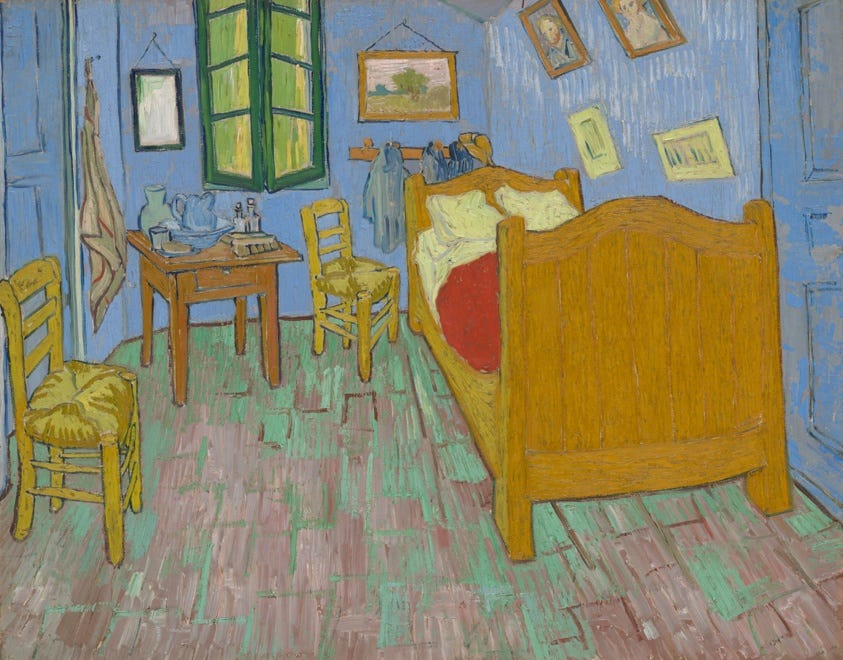
Image recognition tools. You photograph a painting and the app looks for similar images online. These can help you identify a well-known work or find where a picture has appeared before. They do not value it, and they struggle with original, unpublished paintings, because there is nothing online to match. A famous picture such as Vincent van Gogh’s “The Bedroom” (1889) is easy to match, because countless images of it exist online. A new painting by an emerging artist has no such trail.
Artist-and-size calculators. You enter the artist’s name and the dimensions, and the app multiplies by a market factor. One example reported in the press is Limna, an app from the founders of the Artfacts platform. A December 2023 article in finews described its method as “width plus height times artist factor” and said it draws on a database of more than 800,000 artists. The article also reported an 80 percent match rate with gallery prices without explaining how it was measured, so treat that as a claim, not a result. We have not tested the app, and its features may have changed since.
AI valuation from details. You upload an image and describe the work: size, medium, year, materials and your own history. A language model or other AI turns that into a likely price range. This is the approach we use at Priceyourpainting for original paintings by living artists. It works best when the details you give are accurate and complete.
What an app cannot do
Whatever the type, the same limits apply.
Authenticate a painting. An app cannot tell you whether a signature is genuine or an attribution is correct. That needs physical inspection and research by a specialist, as our unusual art sales newsletter shows: an AI suggested an artist for one thrift-shop find, but experts looking at the canvas confirmed it.
Judge condition. Cracks, flaking, repairs and fading change value, and a photograph on a phone hides most of them.
See provenance. The history of ownership, exhibitions and sales often matters more than the image. An app only knows what you tell it.
Replace sold prices. An estimate is not a sale. Only a buyer paying a price turns it into a market fact.
Value everything equally well. Apps that rely on large databases do better with artists who have a market record than with emerging ones. That is a general limit of any method, not a flaw of one tool.
Who benefits most
A painting appraisal app is a sensible first step for:
Emerging artists who want a sense of where to price an original painting before choosing a method.
Owners who want a rough idea before deciding whether a specialist is worth paying for.
Sellers who want to check an asking price is not wildly off.
It is a poor choice for anyone who needs a document that an insurer, a court or the tax authorities will accept.
How to get a useful result from an app
Photograph the painting properly. Soft, even daylight, square-on, with the edges visible. Add a close detail of the signature.
Enter exact dimensions in the unit the app asks for, and note whether the frame is included.
State the medium and support precisely, for example oil on canvas or acrylic on board.
Be honest about the artist’s record. Exhibitions, previous sales and press all affect the result. Do not inflate them.
Run it once, then compare it with a second method. For your own work, a size-and-time formula and a look at comparable sold prices will test the result. Our guide to how much your oil painting is worth and our complete guide to pricing your art show how.
Treat the output as a range, not a fixed figure.
Museums record paintings with exactly this precision. The Art Institute of Chicago lists Claude Monet’s “Arrival of the Normandy Train, Gare Saint-Lazare” (1877) as oil on canvas, 60.3 x 80.2 cm. Copy that level of detail for your own work.

Our own free tool follows this logic. You upload a painting, give the details, and get a price range in about 30 seconds. It is an estimate for original paintings, not a formal appraisal, and it does not authenticate anything.
Questions to ask before you trust any app
Does it say what data it uses, and how recent that data is?
Does it call its result an estimate or an appraisal, and is that honest?
Does it explain what it cannot do?
Does it tell you how to check the number?
Is the free part really free, and what does the paid part add?
What does it do with your images and information?
If an app guarantees a price, promises certified results with no human involved, or cannot answer these questions, be careful.
How to read the result
Whatever an app shows you, read it in three parts.
The range. A good tool gives a low and a high figure. The width of the range tells you how uncertain the estimate is. A narrow range for an unknown artist should make you more careful, not more confident.
The inputs. Change one detail at a time and watch what moves. If doubling the stated exhibition history barely changes the result, the app is probably leaning on size. If a different year or medium shifts it a lot, the detail you chose matters. This is a quick way to learn what your price depends on.
The gap with your own figure. If your formula says one thing and the app says another, do not average them. Ask why they differ. A gap often points to something real: a rate that is too low or too high, a size you have mis-entered, or a track record the app cannot see. Write down the reason, and only then choose a price.
Save the result with the date. Markets and tools change, and a dated record shows how your price developed.
When you need a human appraiser
Move on from an app and hire a qualified appraiser when:
You need a document for insurance, probate, divorce or tax.
The painting is old, signed by a known name, or inherited and unattributed.
The potential value is high enough that being wrong would be costly.
You are about to sell at auction and want a reserve you can defend.
Our guide to getting a painting appraised, free and paid lays out the options, and our complete guide to valuing a painting covers the factors a professional will look at. Check any appraiser’s credentials, ask what standards they follow and what purpose the report is written for, and get the fee agreed in writing before work starts.
A simple way to think about it
An app is a quick opinion. A formal appraisal is a signed professional judgement. A sale is the only real proof. Use each for what it is good at, and your decisions about price will be stronger for it.
Where to go next
Want to set a price yourself? Start with how to price your art as an emerging artist.
Valuing an oil painting? Read how much is my oil painting worth.
Need a professional appraisal? Compare the options in how to get a painting appraised.
References
Tema McMillon, “A Collector’s Guide to Appraisals”, Chubb North America Newsroom (fair market value, retail replacement value, appraiser credentials, USPAP), 2018 (date taken from the URL): https://news.na.chubb.com/2018-08-08-A-Collectors-Guide-to-Appraisals
Appraisers Association of America, “About USPAP”: https://www.appraisersassociation.org/education/uspap/about-uspap
Simone Töllner, finews, article on the Limna art market app, 1 December 2023: https://www.finews.com/news/english-news/61209-limna-art-market-app-price-valuation
Art Institute of Chicago, artworks 28560 and 16571: https://www.artic.edu/artworks/28560 and https://www.artic.edu/artworks/16571
Priceyourpainting newsletter, “Small paintings, big stories: unusual art sales Ep. 4”: https://priceyourpainting.com/blog/small-paintings-big-stories-unusual-ep4
Made with love by artists, for artists 🫶🏼
info@priceyourpainting.com | www.priceyourpainting.com | Instagram