In this article (5 sections)
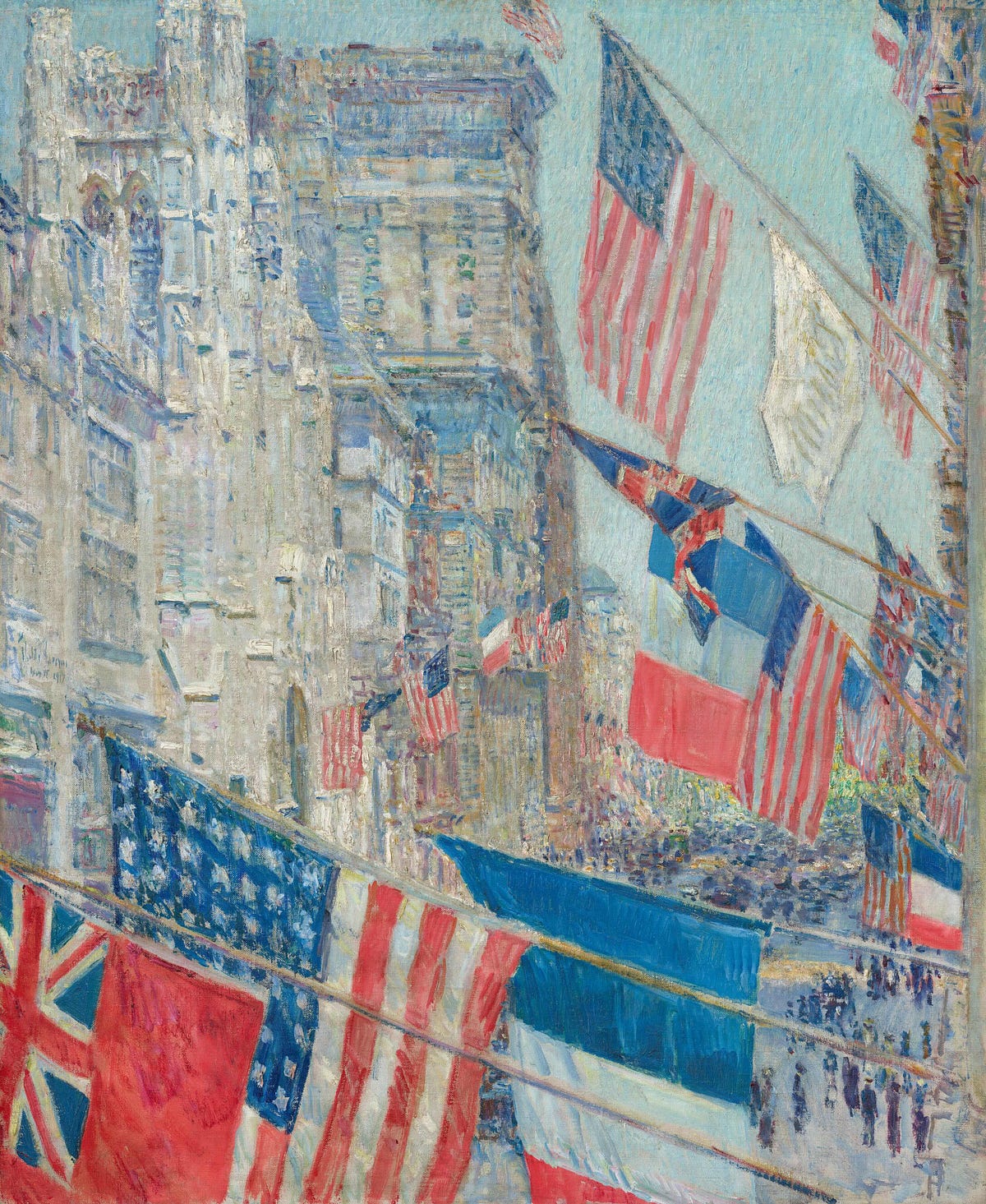
Remembrance Sunday is on 8 November and Armistice Day follows on the 11th. Most of what we show on those days comes from the front line. This piece is about a painter who stayed at home. In 1917 Childe Hassam painted Fifth Avenue in New York, where the flags of the Allied nations hung over the street.
The Metropolitan Museum of Art calls him “the only major American Impressionist to depict the home front during World War I”. It dates his series from 1916 to 1919. The National Gallery of Art in Washington counts the series at about thirty flag paintings. It is a useful case for any painter, because a series raises a practical question we hear often: if you paint the same subject many times, how do you price it?
Fifth Avenue, May 1917
The United States entered the war in April 1917. About six weeks later, on 17 May, Hassam finished Allies Day, May 1917, according to Smarthistory. The date is written on the canvas. The painting looks north along Fifth Avenue, and the flags cut across the receding perspective of the street.
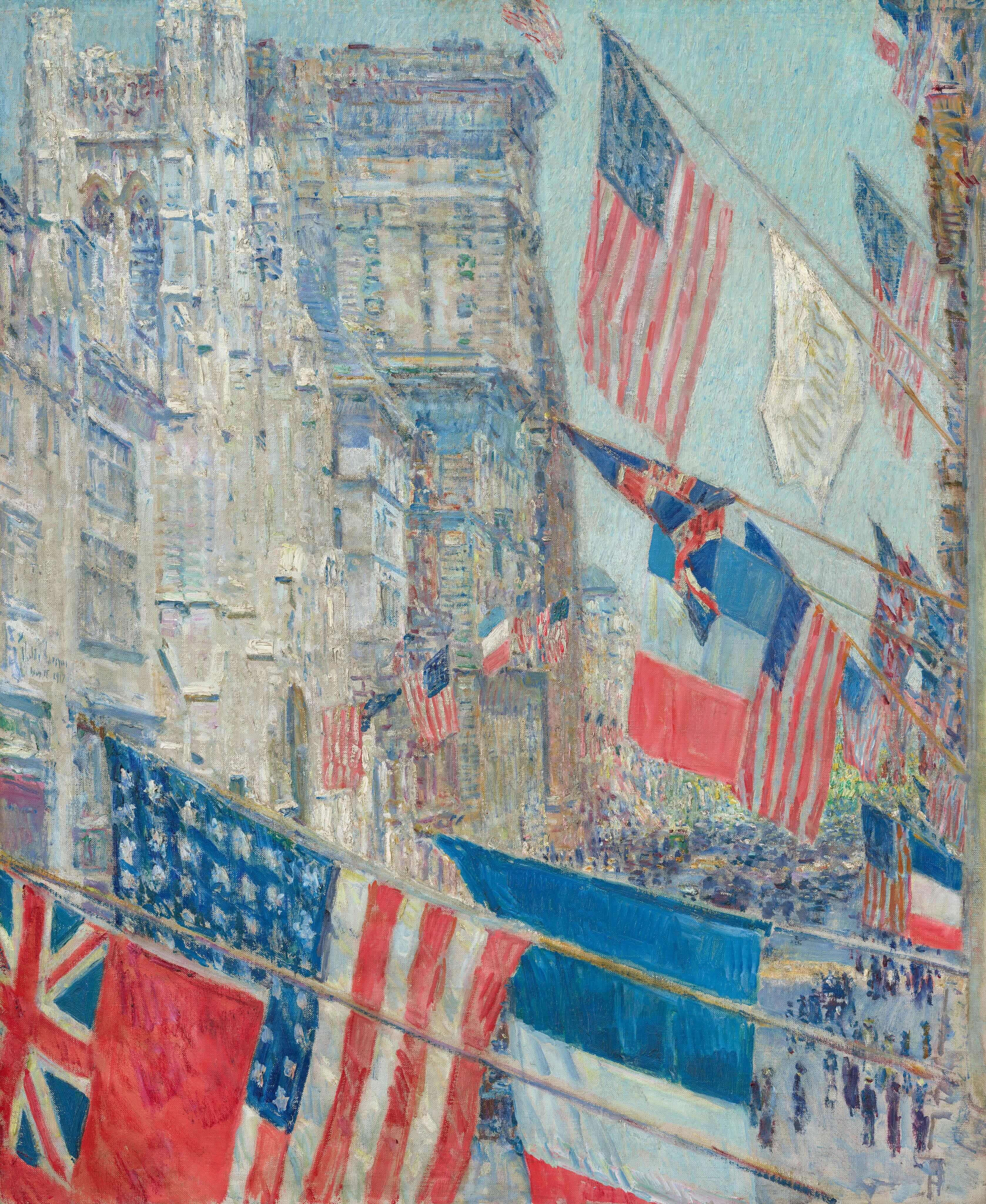
The National Gallery’s wall text says the painting commemorates the US entry into the war, and that Fifth Avenue was named the “Avenue of the Allies” to honour the alliance with Great Britain and France. It adds that Hassam painted it with bright sunlight and colour, in the manner of the French Impressionists. The museum’s article on the series names Monet and Pissarro as his models.
The wall text also makes a point that is easy to miss. The breezy, festive mood of the painting glosses over the horrors of modern warfare that American soldiers were about to face in Europe. That tension is why it belongs in a Remembrance week reading list: it records what the home front chose to show.
Why the avenue was covered in flags
The Met’s catalogue entry for a later canvas in the series, Avenue of the Allies, Great Britain (1918), explains the setting. Fifth Avenue and the nearby streets were decorated for the Liberty Loan drives, and the government organised the displays to promote the sale of savings bonds. A Met guide to Hassam adds that the flags of twenty-two Allied countries lined the avenue between 42nd and 59th Street.
So the series is not only a set of pretty street scenes. It records a public campaign that artists were asked to share in: the National Gallery says reproductions of the paintings were sold to support the war effort.
Recording what you see
Hassam did not paint the trenches. He painted a street in his own city, again and again, over several years. If you paint from life, the lesson is practical: the subject nearest to you, painted often and dated, builds a record you can price from.
Our series on art and conflict covers the other side of the story. It starts with how artists are responding to war.
References
The Metropolitan Museum of Art, Childe Hassam, “Avenue of the Allies, Great Britain”, 1918, accession 67.187.127: https://metmuseum.org/art/collection/search/11028
The Metropolitan Museum of Art, family guide, “Childe Hassam”: https://metmuseum.org/-/media/Files/Learn/Family%20Map%20and%20Guides/Childe%20Hassam.pdf
National Gallery of Art, Childe Hassam, “Allies Day, May 1917”: https://www.nga.gov/artworks/30115-allies-day-may-1917
National Gallery of Art, “Childe Hassam and the Flag in American Art”: https://www.nga.gov/stories/articles/childe-hassam-and-flag-american-art
Smarthistory, “Childe Hassam, Allies Day, May 1917”, 28 May 2024: https://smarthistory.org/childe-hassam-allies-day-may-1917
Made with love by artists, for artists 🫶🏼
info@priceyourpainting.com | www.priceyourpainting.com | Instagram
 Comment on Substack