In this article (8 sections)
The UK is the world’s second-largest art market, at $10.5 billion in 2025 according to the Art Basel and UBS Art Market Report 2026. For an American painter it is a large market in the same language. The rules for getting a painting in are built around a buyer-side tax, import VAT, and the way you ship decides who pays it and when.
This guide covers original paintings only, as the rules stand on 1 November 2026, with the source for each point. It is not customs or tax advice, so use a customs broker or your accountant for your first shipment. For the market itself, see art market trends in the UK, US and Europe, and for other routes to buyers, where to sell your paintings in 2026.
What a UK buyer pays on a painting from the US
There are two possible charges at the UK border: customs duty and VAT.
Duty. The fine art shipper Fine Art Shippers says in a July 2026 guide that original artworks under Chapter 97 of the tariff are generally free from import duty when entering the UK.
Import VAT. This is the charge that matters. HMRC lets works of art be valued at a quarter of their real value for import VAT. According to the government’s guidance on valuing goods for import VAT, you take the customs value plus additional costs, multiply it by 25%, and then charge VAT at the standard 20% on that smaller number. HMRC’s own wording is that this “reduces the effective VAT rate to 5%”.
Two details change the bill:
Shipping and insurance count. The value is the painting plus the costs of getting it to the UK, not the painting alone. Fine Art Shippers makes the same point.
The reduced valuation has to be claimed. HMRC’s import procedures manual says the goods must be entered under the right procedure code, and that the importer or their agent declares that the goods qualify. Ask your broker or courier to confirm, before the painting leaves, that they will claim it.
A worked example, with invented figures. A painting sells for £1,000, and packing, shipping and insurance to the UK add £150. The customs value is £1,150. A quarter of that is £287.50, and 20% VAT on £287.50 is £57.50. At the full rate on £1,150 the VAT would have been £230. The reduced valuation is the difference between those two numbers, which is why it matters.
What counts as an original painting
HMRC’s guidance says that heading 9701 includes paintings and drawings created entirely by hand, and that heading 9702 covers original prints made in limited numbers. The reduced valuation applies to works of art as defined in section 21 of the VAT Act, and your painting needs to fall inside that definition on the entry.
Prints and reproductions follow other rules and are not covered here, and neither are the estimates from our tool, which are for original paintings only.
Under £135 is a different route
UK VAT works in two ways, split at £135 per consignment. According to the government’s guidance on low-value imports, VAT on consignments of £135 or less is charged by the seller at the point of sale, and the seller must register with HMRC to do it. Over £135, the VAT is collected at the border.
Most original paintings sit above that line, so the border route above is the one that applies to them. If you plan to sell small originals to UK buyers for £135 or less, that is a separate process which starts with registering for UK VAT, and this guide does not cover it.
Choose your route
By post. For USPS, the International Mail Manual requires an electronic customs form listing every item with its quantity, weight and value, and a tariff code of at least six digits. First-Class Package International does not accept items worth more than $400, so a painting above that goes by Priority Mail International or Priority Mail Express International. The sale price is the value to declare.
By courier or fine art shipper. For larger or more valuable works, use a shipper that handles fine art and a UK broker. Fine Art Shippers lists a commercial invoice and US export documentation as the usual paperwork, with a certificate of authenticity or provenance sometimes required or recommended. It also recommends nail-to-nail insurance with a condition report. A UK broker coordinates the VAT with the recipient before delivery.
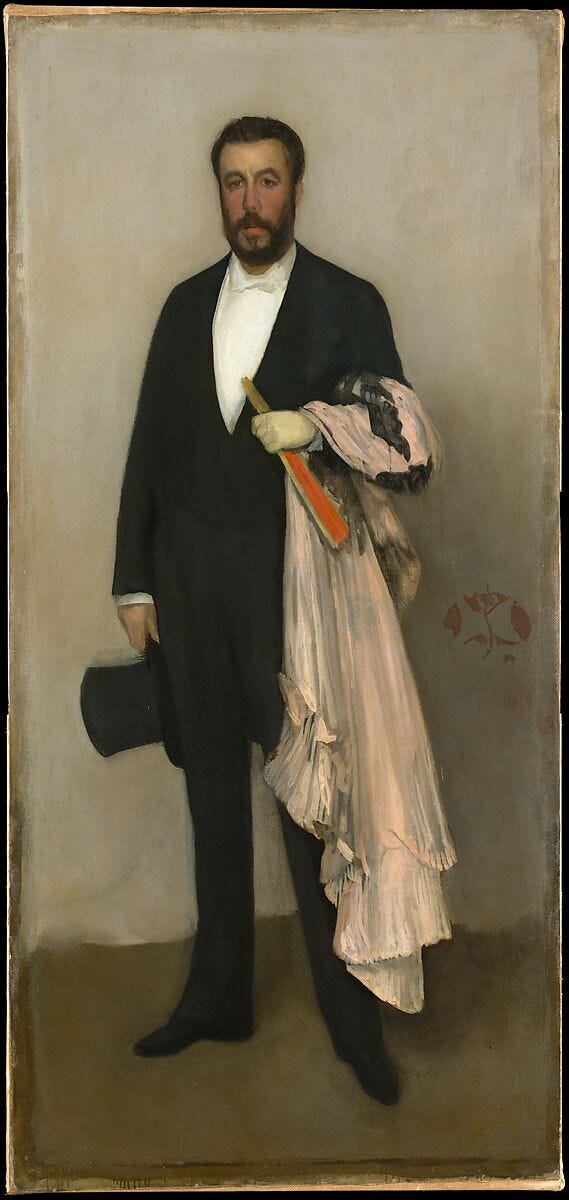
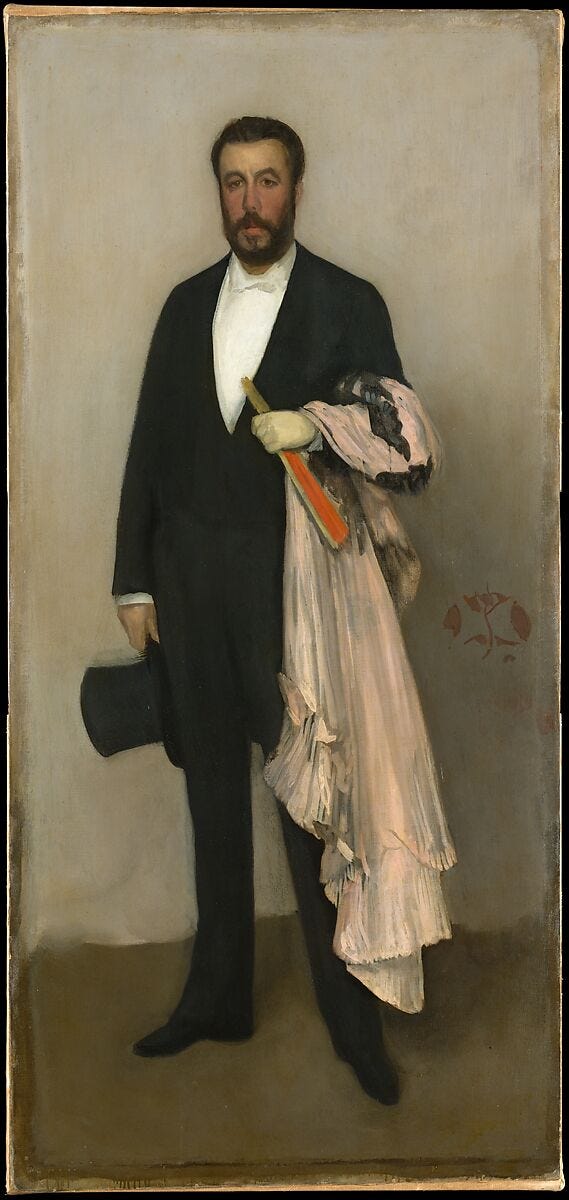
The US side: the export filing. Whistler was born in Lowell, Massachusetts, and died in London, and his portrait of Theodore Duret hangs in New York. Your painting makes the opposite trip, so it also needs the US export paperwork. According to the US Department of Commerce, an Electronic Export Information (EEI) filing is required when the value of the goods under a Schedule B number is over $2,500. Exempt shipments are marked “NOEEI” with the regulation cited. The filer is the exporter or their authorised agent, and the filing is generally made before the goods leave. A fine art shipper can usually file as your agent.
Packing: the wood rule
A painting in a wooden crate has one more rule to meet. The UK government says that solid wood packaging imported into Great Britain must meet the international standard ISPM 15 and carry a legible mark. Plywood and other processed, non-solid wood are exempt.
Non-compliant packaging can be rejected or destroyed, and the importer must then arrange other transport. A plywood crate or a foam-lined box avoids the question, and if you buy a solid-wood crate from a shipper, ask to see the mark.
Pricing for a UK buyer
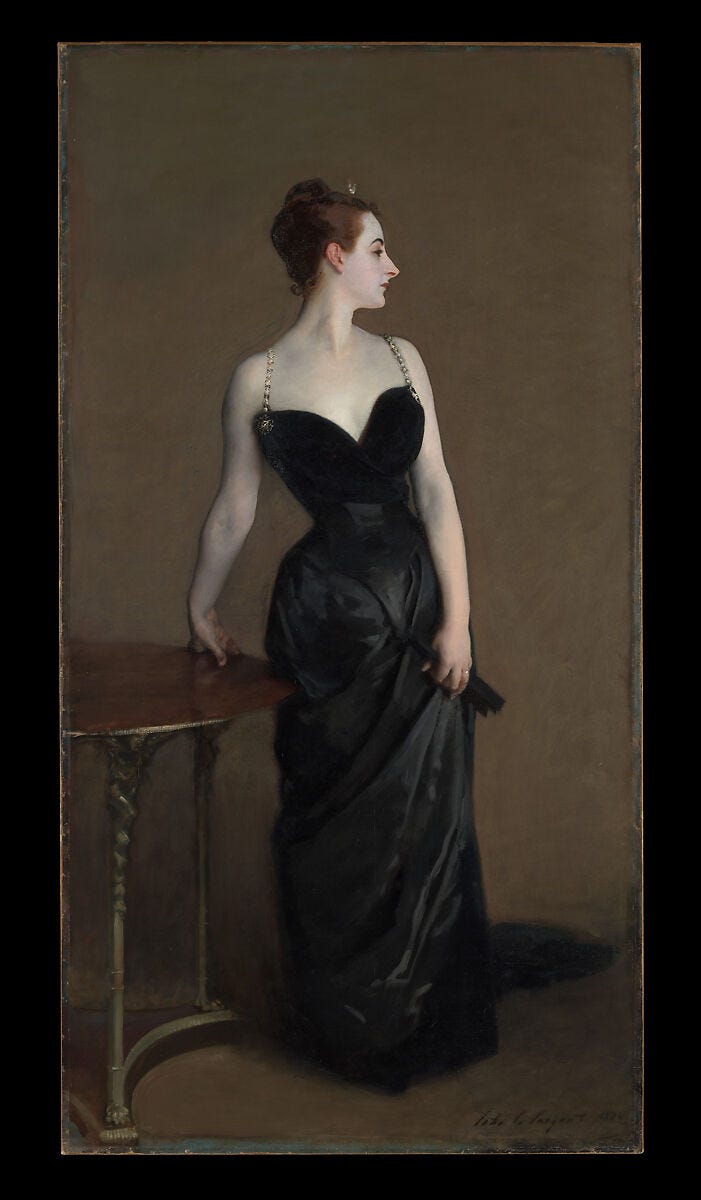
John Singer Sargent was an American painter born in Florence who died in London, and his portrait Madame X is in the Met. Before any of the logistics, you need a number for your own painting. Our free tool gives you an estimated price range for an original painting in about 30 seconds, and it is available in the US, the UK and Italy. It is a guide to the market, not a formal appraisal. For the factors behind a price, see how much is my painting worth.
From that range, choose one price for the painting and show everything else on the invoice as separate lines:
the painting
packing and the crate
shipping and insurance for the declared value
a broker’s fee, if you use one
UK import VAT, shown as the buyer’s cost, with an estimate like the one above
Keeping the lines separate means the painting has the same price on your own site, at a fair or in a gallery. It also means the buyer sees the VAT estimate before they pay. Decide in writing whether the buyer pays the VAT on delivery or you pay it in advance and add it to the invoice, and say who pays if the painting comes back, since a return is a second shipment.
Before you ship
Three official pages hold the rules that decide your entry: the government’s guidance on valuing goods for import VAT, which was last marked as updated on 30 September 2026, its page on wood packaging, and HMRC’s import procedures manual, updated on 21 October 2026. Read the first two once, and give your broker the third.
References
Art Basel and UBS, “The Art Basel and UBS Global Art Market Report 2026”: https://www.artbasel.com/stories/the-art-basel-and-ubs-global-art-market-report-2026
GOV.UK, “How to value goods for import VAT” (works of art, effective rate of 5%, headings 9701 and 9702): https://www.gov.uk/guidance/how-to-value-goods-for-import-vat
HMRC, Import Procedures and Special Procedures manual, IMPS05200, updated 21 October 2026: https://www.gov.uk/hmrc-internal-manuals/imports/imps05200
GOV.UK, “Technical handbook on BIRDS: overview of VAT on low-value imports”, updated 30 June 2026: https://www.gov.uk/guidance/technical-handbook-on-bulk-import-reduced-data-set-birds/overview-of-vat-on-low-value-imports
GOV.UK, “Wood packaging material for import and export”, updated 22 April 2026: https://www.gov.uk/guidance/wood-packaging-material-for-import-and-export
Fine Art Shippers, “Shipping Artwork from the USA to the UK: A Practical Guide”, 21 July 2026: https://fineartshippers.com/shipping-artwork-from-the-usa-to-the-uk-a-practical-guide/
USPS, International Mail Manual, “Customs Forms and Online Shipping Labels” (Exhibit 123.61): https://pe.usps.com/text/imm/immc1_009.htm
U.S. Department of Commerce, International Trade Administration, Electronic Export Information filing guidance: https://www.trade.gov/print/pdf/node/7430
The Metropolitan Museum of Art, collection records 13.20 (Whistler) and 16.53 (Sargent): https://www.metmuseum.org/en/art/collection/search/13211 and https://www.metmuseum.org/art/collection/search/12127
 Comment on Substack