In this article (6 sections)
A landscape is the easiest painting to like and one of the hardest to price. The view is familiar, so buyers feel they know what it is worth, and the painter has no obvious number to start from. This guide is for painters pricing their own original landscapes, in oil, acrylic or any other medium, and it shows how to get from a blank price tag to a range you can explain.
The view is not what sets the price
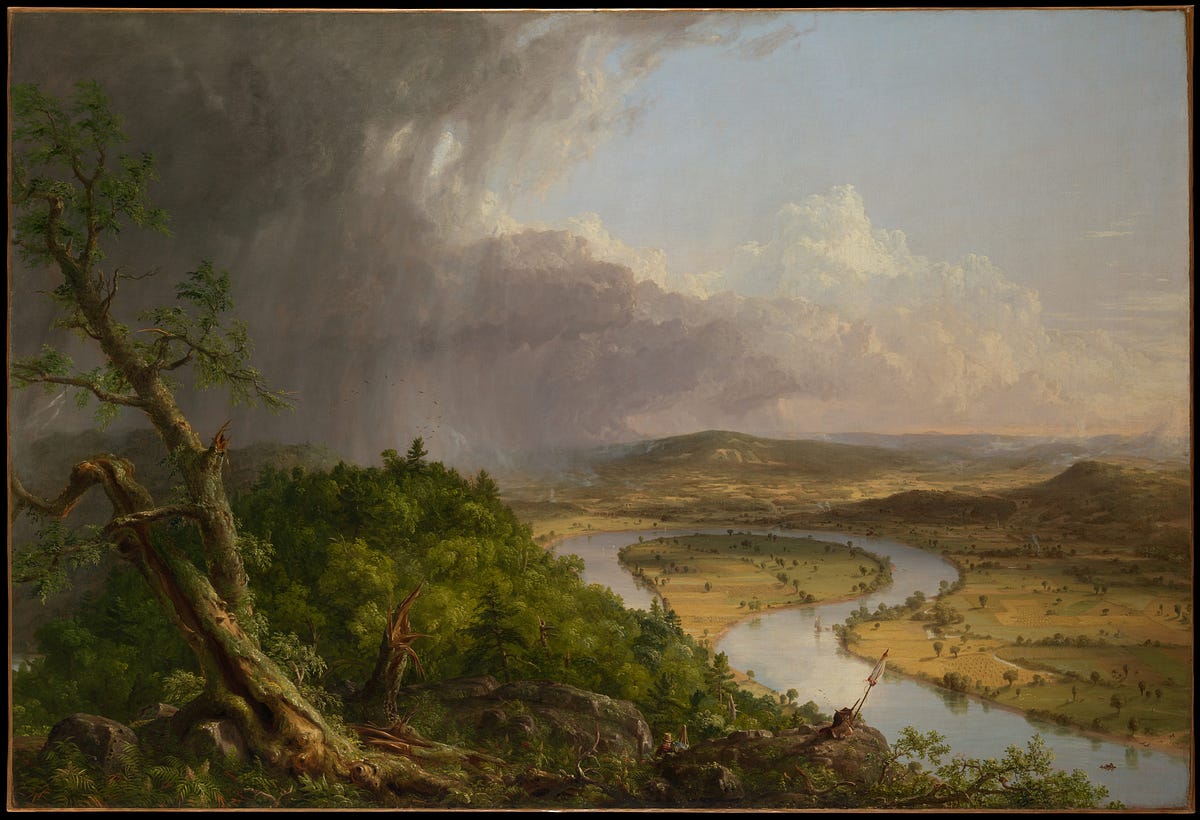
Two paintings of the same view can sit at very different points on a price scale. Size, medium, how finished the painting is, the painter’s record and the work behind it all count. The Metropolitan Museum of Art holds two paintings by Thomas Cole of the same view that show how far one subject can stretch.
A finished studio landscape
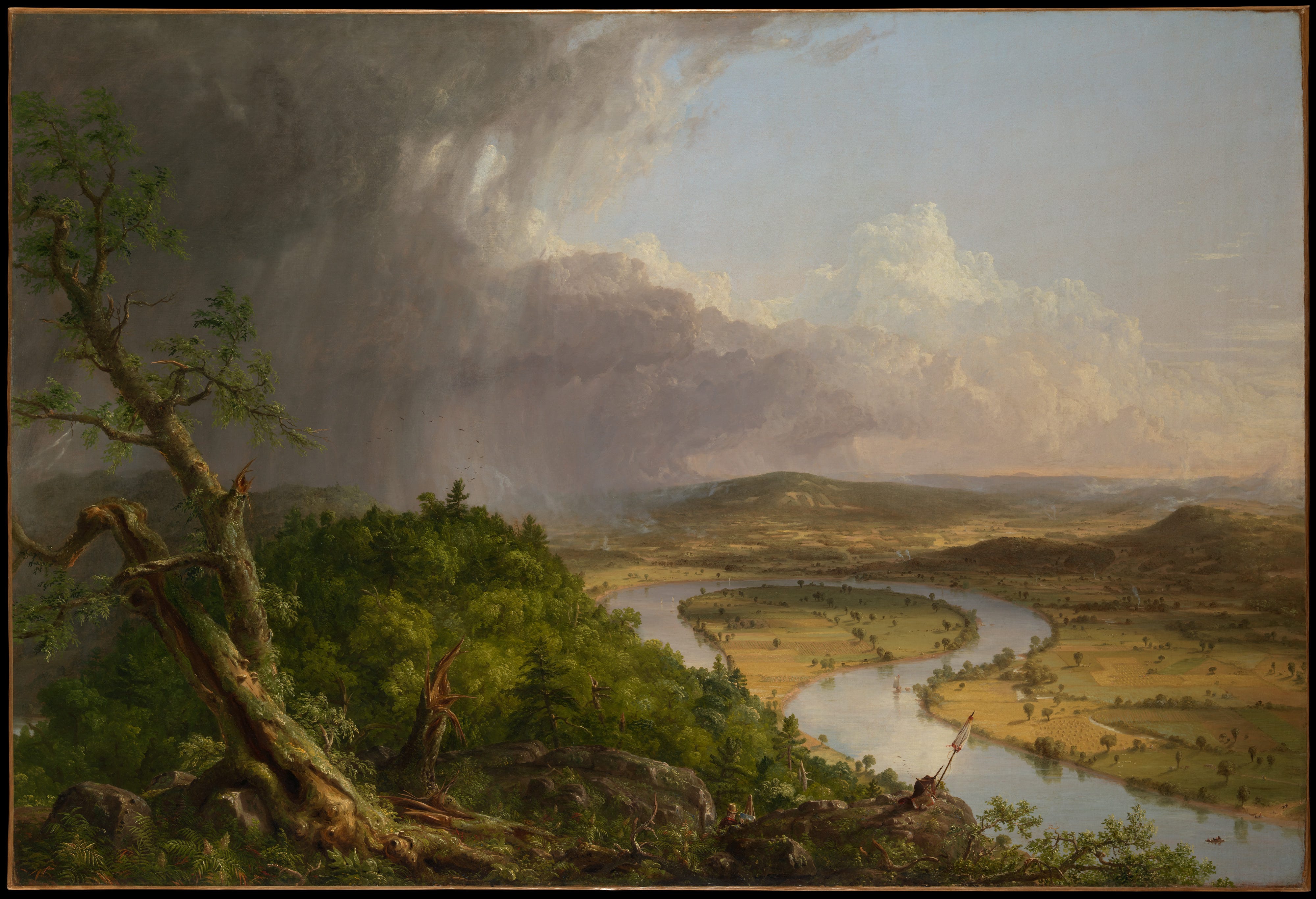
The Oxbow shows the bend of the Connecticut River, with stormy wilderness on one side and sunlit farmland on the other. It measures 51 1/2 by 76 inches, which is about 3,900 square inches.
The sketch for it
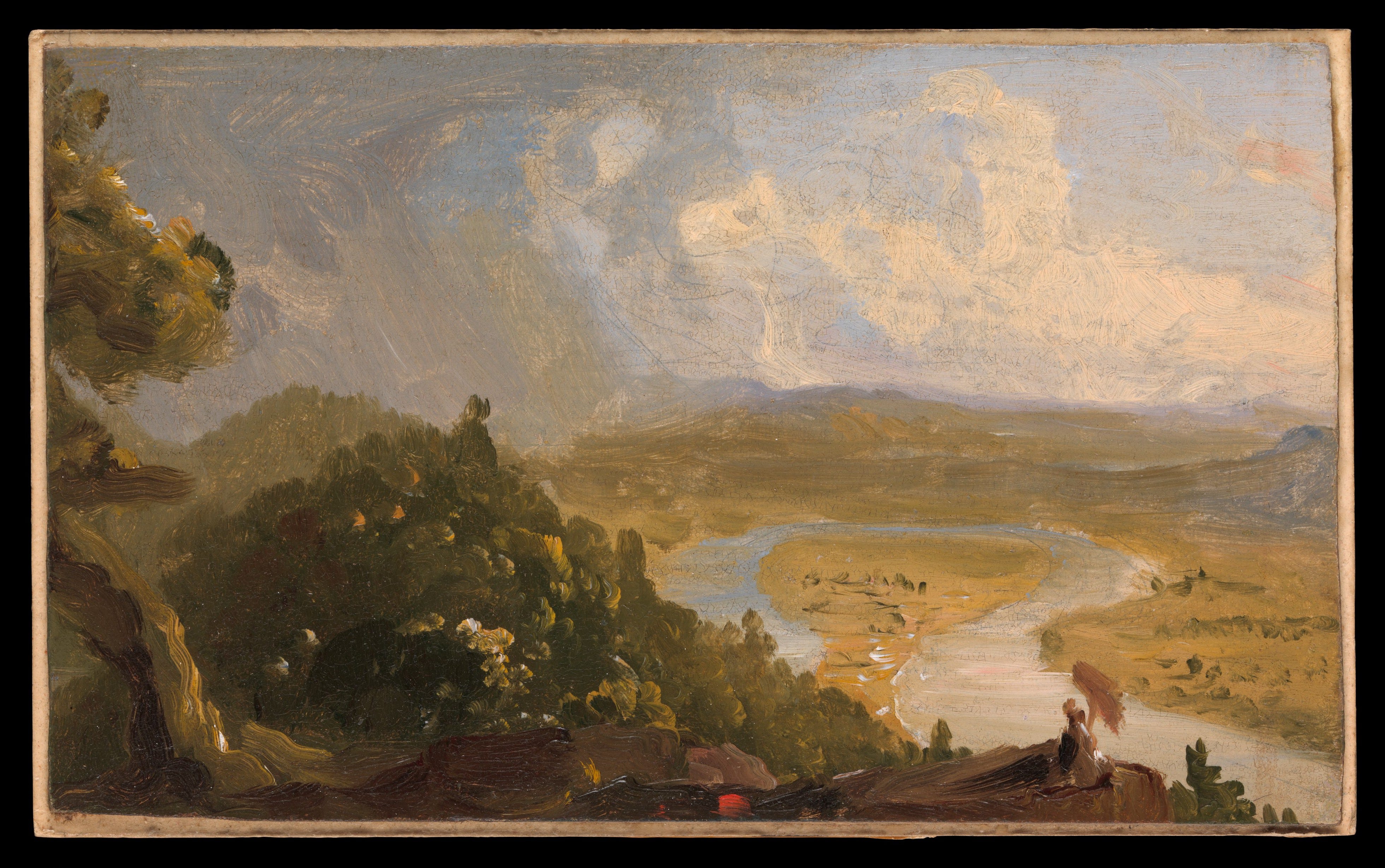
Cole’s sketch of the same scene is 5 1/2 by 9 3/8 inches, about 52 square inches, roughly 76 times smaller. The Met says he sketched outdoors and used the sketch as an indispensable tool in making the studio painting.
For you, the lesson is practical. A small outdoor study and a finished studio landscape of the same view are two different products with two different prices. Label which one you are selling, and do not price one by the other.
What the market data can and can’t tell you
The Art Basel and UBS Art Market Report 2026, published on 12 March 2026, estimated global art sales in 2025 at US$59.6 billion, up 4%. For painters who sell at modest prices, three details in its press release matter:
Sales below US$50,000 fell 2% in both value and volume.
Online-only sales fell 3% to 15% of the market, and online sales fell to US$9.2 billion, their lowest level since 2019.
The share of new buyers was highest for the smallest dealers, at 60%.
The press release gives no separate figures for works under US$5,000 and does not analyse emerging artists, so it cannot tell you what a typical emerging landscape sells for. For that, you need comparable works.
Four steps to a range for your landscape
Record the facts. Write down the size, the medium, the year, whether it is a sketch or a finished work, the cost of materials, and the hours it took. Note the condition of the surface and whether it is framed.
Find three to five comparable landscapes. Look for work by painters at a similar stage, in a similar size and medium. Note whether each price is an asking price or a sale. Asking prices are hopes. Sold prices are evidence.
Work out your floor. Add materials, framing and your hours at a rate you choose. Your price should not go below it. How to determine the right price for your artwork explains the method in full.
Choose one price inside the range and write down why. Keep a dated record of the sale or the lack of one, so the next landscape starts from evidence. If you paint in oils, how to price oil paintings goes further, and how much is my painting worth: 5 factors covers what pushes a number up or down. For the longer story of how valuation moved from dealers’ judgement to something you can check, see the evolution of painting estimation.
Where you list the painting changes what you keep from the sale, so decide the price before the platform. Where to sell your paintings in 2026 compares the main routes.
If you paint a series
Landscapers rarely paint one view once. If you have several paintings of the same size and medium, give them the same price unless something real separates them: a finished studio piece against a quick study, or a framed work against an unframed one. Buyers who see two similar paintings at different prices will ask why, and you need an answer that is about the work, not about how you felt that day. Raise the price for the whole series together when sales justify it, not painting by painting.
Get a starting range in 30 seconds
Our free estimator gives you an estimated price range for an original painting, including landscapes, in about 30 seconds. It uses the size, medium, year of creation, cost of materials, hours worked and the last similar work you sold. More than 10,000 artists have used it, and over 50,000 paintings have been analysed. It is a guide to the market, not a formal appraisal, and it is built for original paintings only.
References
The Art Basel and UBS Art Market Report 2026 (Arts Economics), press release, 12 March 2026: https://d2u3kfwd92fzu7.cloudfront.net/Press_Release_l_The_Art_Basel_and_UBS_Global_Art_Market_Report_2026_I_E.pdf
The Metropolitan Museum of Art, Thomas Cole, View from Mount Holyoke, Northampton, Massachusetts, after a Thunderstorm (The Oxbow), 08.228: https://www.metmuseum.org/art/collection/search/10497
The Metropolitan Museum of Art, Thomas Cole, Sketch for View from Mount Holyoke..., 2014.59: https://www.metmuseum.org/art/collection/search/20639
 Comment on Substack