In this article (7 sections)
If you paint in Canada, the price on a painting has to do three jobs. It has to match what buyers will pay, it has to work with the tax rules, and it has to survive the commission of whichever platform sells it. This guide is for painters in Canada selling original paintings, and it works in Canadian dollars throughout.
Start with a floor, not a price
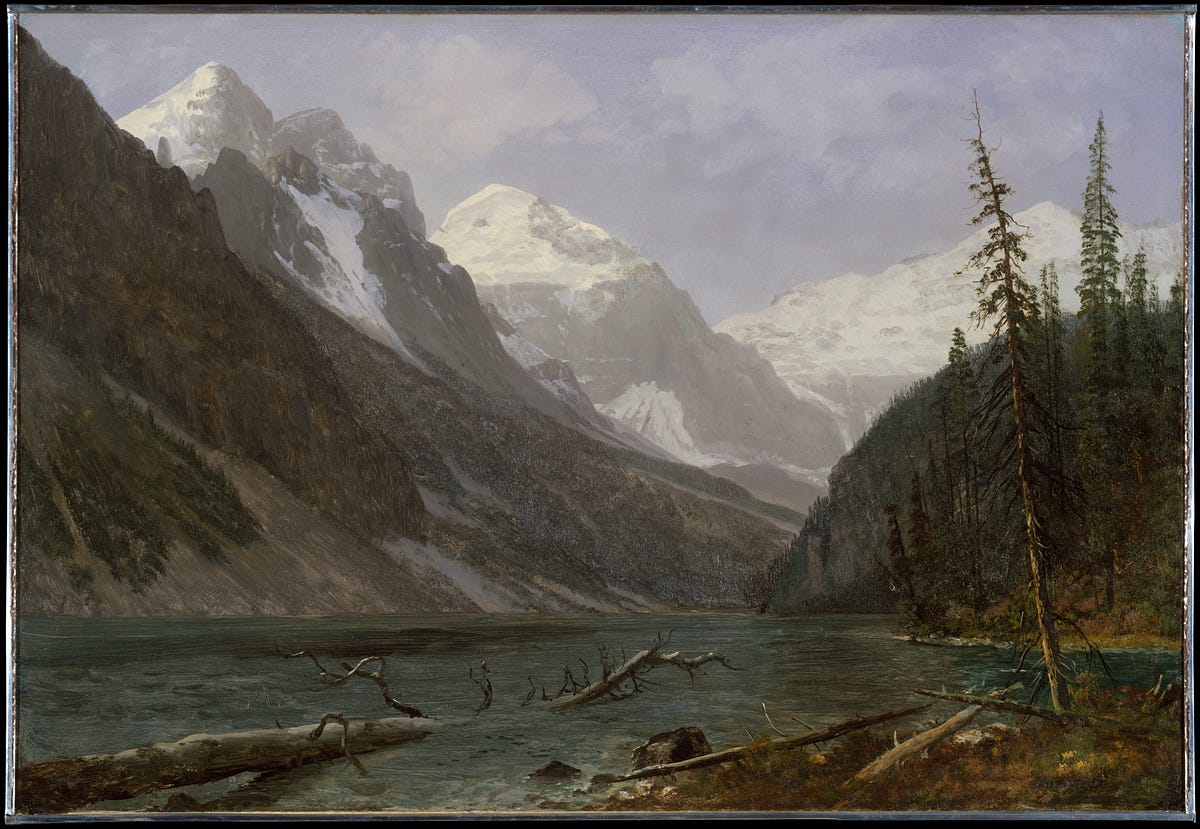
The simplest pricing rule is by area: pick a rate per square inch and multiply. It is useful for one thing, which is a floor. It is a poor guide to the price itself, and two paintings in the Metropolitan Museum of Art show why.
The small one
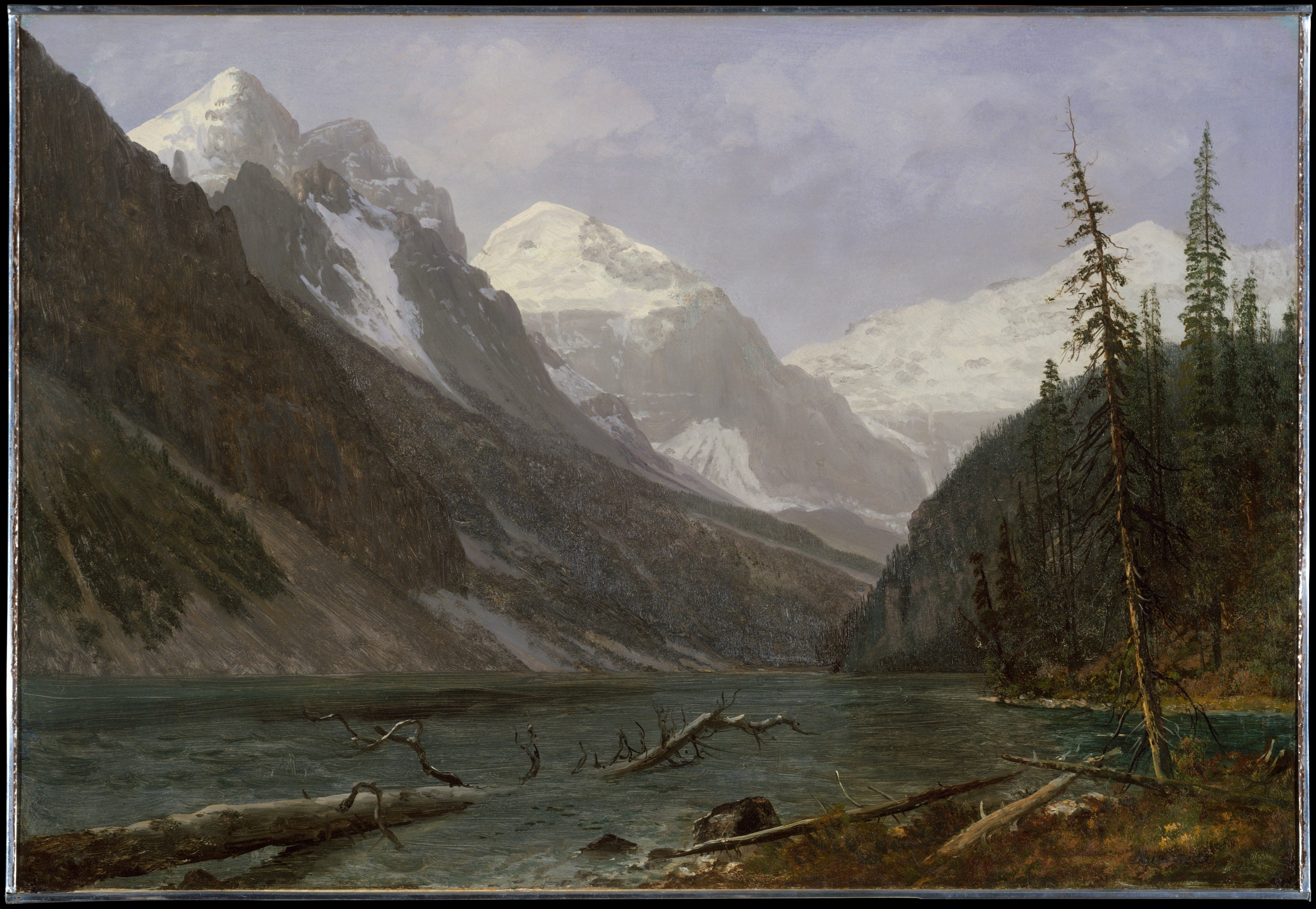
Bierstadt’s oil sketch of Lake Louise in the Canadian Rockies measures 14¾ by 21 inches, about 310 square inches. The Met describes it as an oil sketch made on his travels in the American and Canadian West, which he used as a reference for his large studio paintings.
The large one
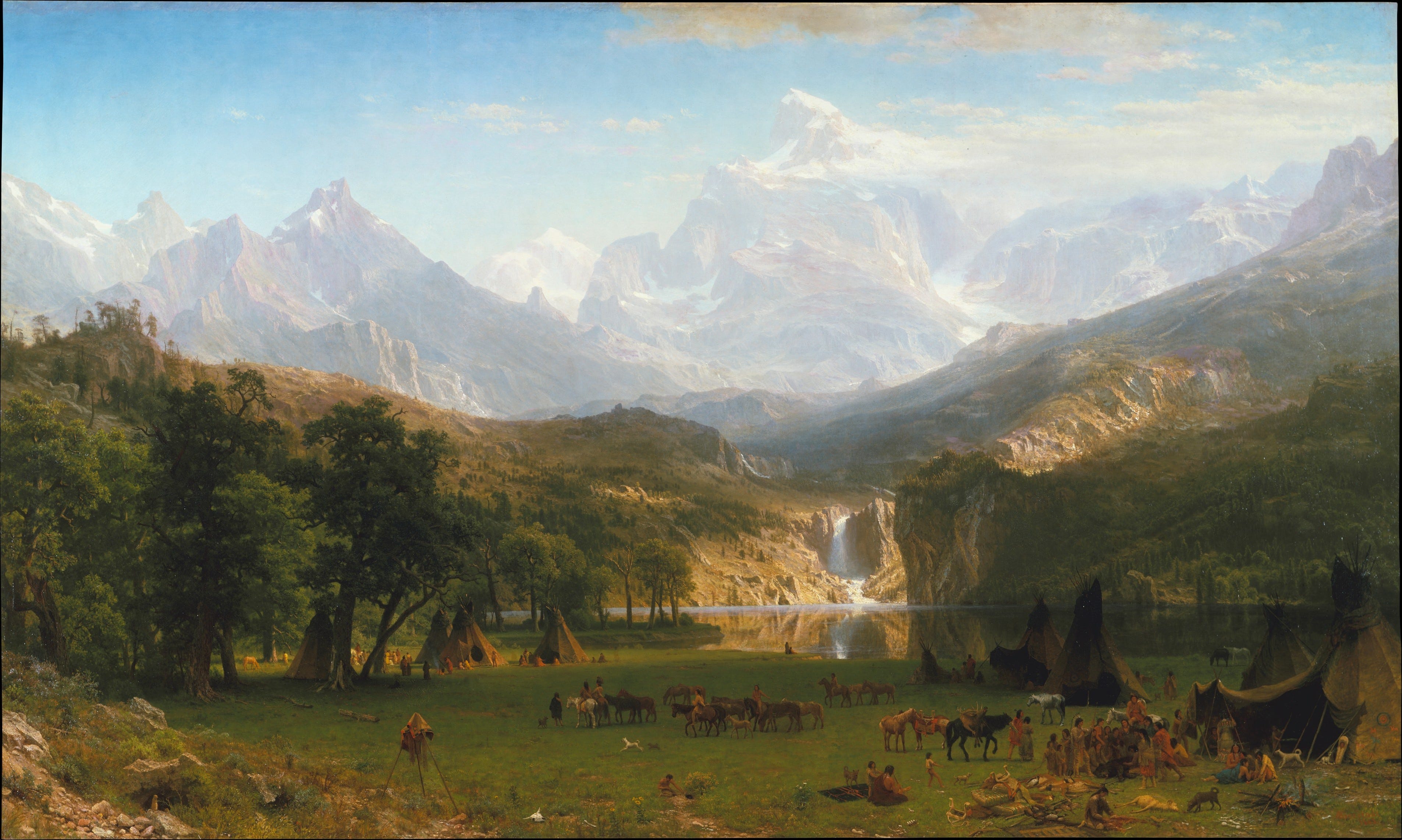
His The Rocky Mountains, Lander’s Peak, painted in 1863, measures 73½ by 120¾ inches, nearly 29 times the area of the sketch. Nobody would say the second is worth 29 times the first because of its size. Career stage, medium and the work behind the painting all enter the price. For the factors in detail, see how much is my painting worth: 5 factors, and for oils how to price oil paintings. For how valuation methods developed, see the history of painting estimation.
Build your price in Canadian dollars
A method you can repeat beats a number you feel good about. Four steps:
Work out your floor. Add the cost of materials and framing to your hours multiplied by the hourly rate you choose. For an illustrative painting with CA$40 of materials and 12 hours at CA$25, the floor is CA$340. These numbers are an example, not a market rate.
Adjust for size and medium. Larger work and slower media justify more. Do it with a written rule, for example a base rate per square inch that rises for oils.
Adjust for your record. Exhibitions, sales and a waiting list move you up. A first sale does not.
Pick one price and fix it in Canadian dollars. Write the logic in a sentence so every later painting follows the same reasoning, and keep a dated record of each sale so the next price starts from your own sales.
If you also sell to buyers in the US, price in Canadian dollars first and convert at the current rate, rather than the reverse. Otherwise your Canadian price drifts with the exchange rate.
GST/HST: the $30,000 line
The Canada Revenue Agency’s small supplier rule is the first tax question for a painter who starts to sell. According to its page, last updated on 16 June 2026, a business is a small supplier when its sales stay at or under $30,000 over four consecutive calendar quarters. If you exceed $30,000 in a single quarter, you stop being a small supplier on the sale that takes you over, and you charge GST/HST from that sale. If you cross it across four quarters, the change comes at the end of the month after that quarter. In both cases you have 29 days to register.
Decide before you reach the line whether your listed prices include the tax or have it added on top. The page does not cover provincial differences, and we have not covered Quebec, so check your province.
CARFAC: not a price list
CARFAC-RAAV publishes a Minimum Recommended Fee Schedule, which it calls sort of like a minimum wage for artists. It sets minimum rates for the use of your work and for professional services, for example an exhibition fee when work is shown in a publicly funded gallery and is not being actively presented for sale. The rates are recommendations, and CARFAC encourages artists to ask for more. According to its page, it does not set the price of a painting for sale. Use it for fees, and use the market for prices.
What platforms keep
Two platforms publish their terms for artists:
Saatchi Art: a 40% commission on originals, with no fees to artists. The collector pays shipping.
Artfinder: two seller plans with prices in Canadian dollars. Core is CA$18 a month with a 45% commission, and Premium is CA$55 a month with a 40% commission. Managed shipping applies to all sellers from 1 December 2025.
Work backwards from what you want to take home. To keep CA$600 from one sale, list at CA$1,000 on Saatchi Art. On Artfinder’s Core plan you list at about CA$1,091, and on Premium at CA$1,000, in both cases before the monthly fee. That is why the price has to be fixed before you choose where to list. For the full picture across platforms, galleries and selling direct, see where to sell your paintings in 2026.
A starting range for your own painting
Our free estimator gives you an estimated price range for an original painting in about 30 seconds. It uses the size, medium, year of creation, cost of materials, hours worked and the last similar work you sold. More than 10,000 artists have used it. It is a guide to the market, not a formal appraisal, and it is built for original paintings only.
References
Canada Revenue Agency, “When to register for and start charging the GST/HST”, modified 16 June 2026: https://www.canada.ca/en/revenue-agency/services/tax/businesses/topics/gst-hst-businesses/when-register-charge
CARFAC-RAAV, “Minimum Recommended Fee Schedule”: https://www.carfac.ca/en/carfac-raav-minimum-recommended-fee-schedule
Saatchi Art, “Why sell on Saatchi Art”: https://saatchiart.com/whysell
Artfinder, “What are Artfinder’s new Seller Plan subscriptions?”: https://sellers.artfinder.com/article/927-what-are-artfinders-seller-plan-subscriptions
The Metropolitan Museum of Art, collection records 1982.119.1 and 07.123 (Bierstadt): https://www.metmuseum.org/art/collection/search/10149 and https://www.metmuseum.org/art/collection/search/10154
 Comment on Substack