In this article (8 sections)
Most pricing advice stops at “add up your costs and charge for your time”. That is correct, and it leaves out the step that decides what you actually take home. This guide works through one painting from start to finish, with every number shown, in pounds. If you sell in dollars, use the same method with your own currency and your own costs.
The numbers for materials, hours and framing are an illustration, not market data. Replace them with yours.
The formula: what you spent plus what your time is worth
Artquest, the UK’s artist-support organisation, says there is no standard way to price artwork, but it gives a starting formula for a direct sale: the cost of making the work plus an artist’s fee for the time it took. For a gallery sale, it adds the gallery’s commission on top. Artquest also says to count the materials you actually used, not everything you bought, and to include a share of your studio costs and overheads, reviewed at least once a year.
Artfinder’s guidance for its sellers, last updated in May 2022, uses the same logic. Set an hourly rate, multiply it by the hours you worked, then add materials. Its example is £15 an hour for 25 hours plus £100 in materials, which gives £475.
A worked example: a 24 by 36 inch oil painting
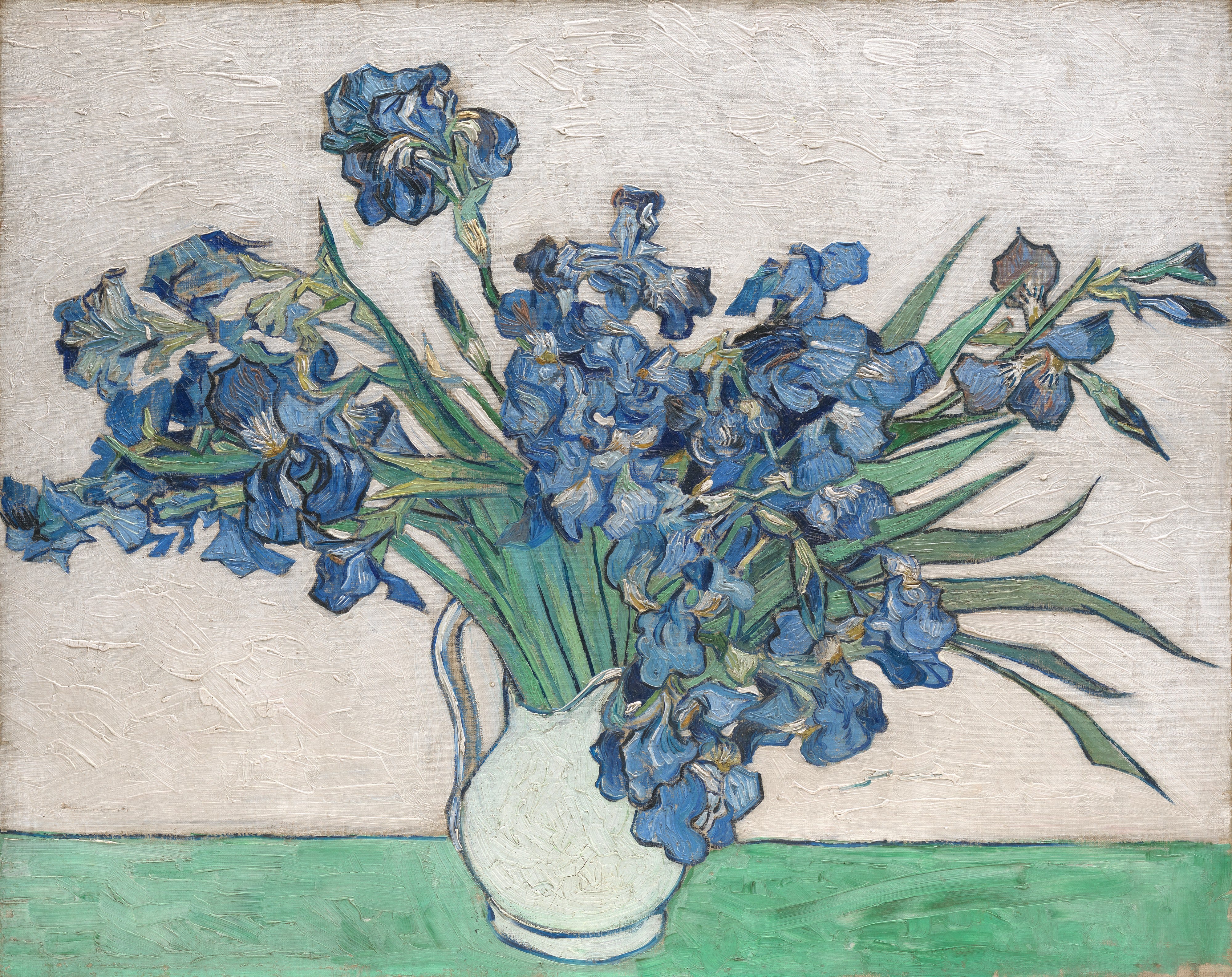
Take one oil painting, 24 by 36 inches, which is 864 square inches. For a sense of scale, Vincent van Gogh’s Irises at the Metropolitan Museum of Art measures 29 by 36 1/4 inches, a little larger than our example.
The costs for our painting:
Materials (canvas, paint, varnish)
£85.00
Time (20 hours at £12.71)
£254.20
Framing
£60.00
Floor price for a direct sale
£399.20
The hourly rate here is £12.71, the UK National Living Wage for workers aged 21 and over from 1 April 2026. It does not legally apply to self-employed artists, so use it only as a floor for what an hour of your time should be worth. Most painters will choose a higher rate as their record grows.
That £399.20 is the least you can sell the painting for, selling it yourself, and still be paid for your time. On the 864 square inches, it is about £0.46 a square inch.
Add the commission by dividing, not by adding
If a platform or gallery sells the painting, it keeps a percentage of the sale price. That means you cannot just add the commission to your floor: a 40% commission is taken from the final price, so you divide your floor by what is left.
Direct sale (no commission)
List at £399.20
Saatchi Art (40% on originals)
List at £665.33
Artfinder, Core plan (45%)
List at £725.82
The commission figures are the platforms’ published terms: Saatchi Art charges 40% on originals and Artfinder’s Core plan takes 45%. Artquest adds that gallery commission varies with the type of gallery, your sales record and the services provided, so ask for the actual terms in writing. Artfinder’s monthly plan fees come on top and are not included in the table.
The result is the number most painters get wrong. The same painting needs a listing price of about £665 on one platform and £400 direct, to leave you with the same £399.20. Decide where you sell first, then fix the price.
Check the price against the size
Area is a check, not a formula. Your floor of £399.20 is £0.46 a square inch.
At £665.33 it is £0.77 a square inch.
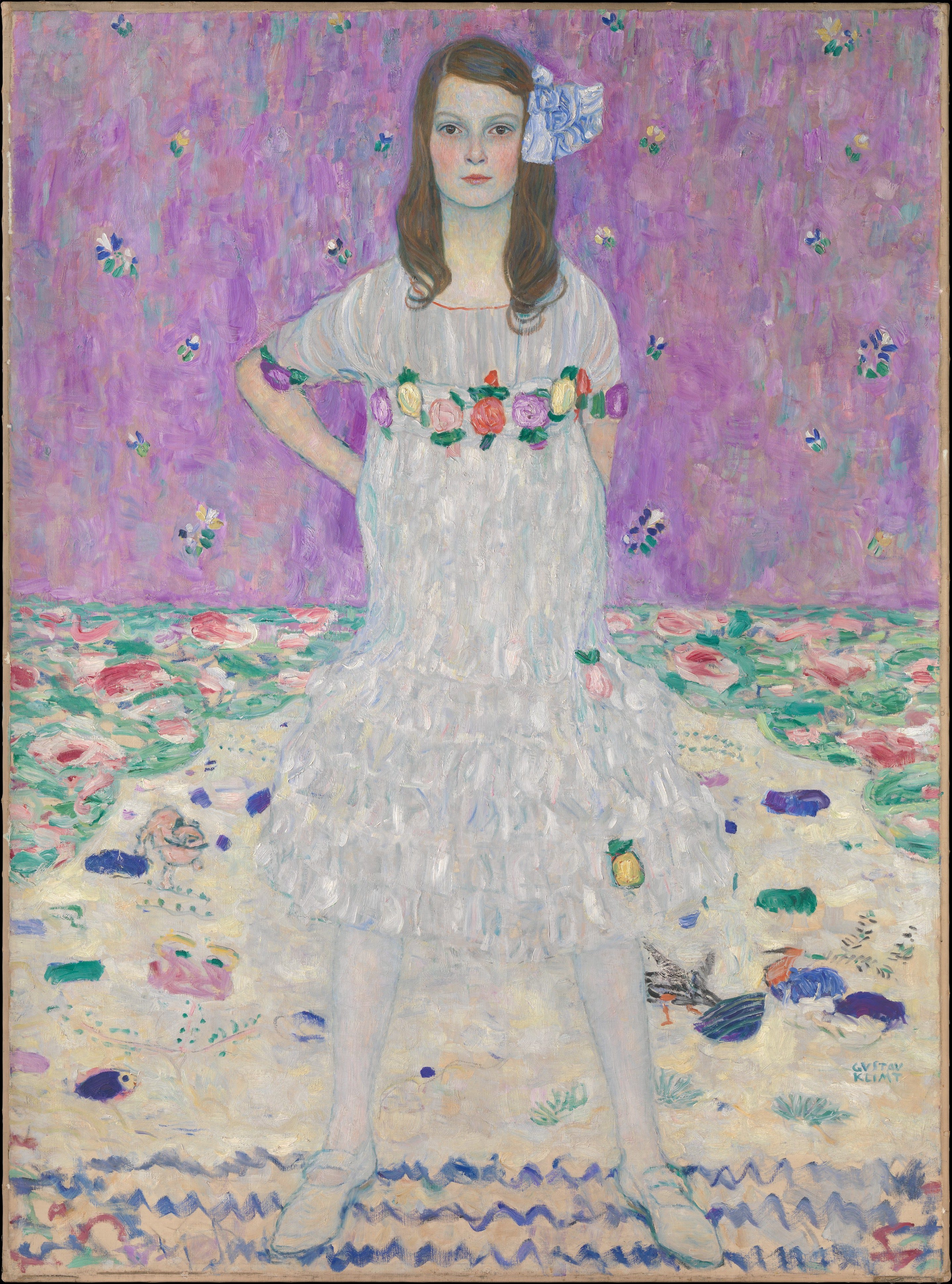
Klimt’s portrait at the Met measures 59 by 43 1/2 inches, about 2,567 square inches, nearly three times the area of our example. If you scaled £0.77 a square inch to a canvas that size you would get about £1,976. That is only right if the larger painting really took about three times the hours and materials. If it took twice as long, your own formula gives a lower number. Use area to catch a price that looks wrong, and the formula to set it.
Compare it with what others charge, then adjust
A formula tells you what you need. The market decides what you can ask. Artquest says to benchmark against artists at a similar stage using similar materials, and to get the price right before your first sale, because lowering it later is hard. It also says work that has sold well tends to stay expensive, and that graduates’ work is usually priced low because there is no sales history to compare against.
Once a price works, Artfinder suggests that if you consistently sell most of what you make over a long period, you consider raising your hourly rate or your prices by 10%.
For the other half of the question, what pushes a price up or down, see how to determine the right price for your artwork, how to price oil paintings and how much is my painting worth: 5 factors. Where you list it changes what you keep, which where to sell your paintings in 2026 compares.
Where this method stops
The formula gives you a floor, not a market price, and it has three limits.
It starts from your costs, not from what buyers pay. Artquest says prices follow the market: scarcity pushes them up and more work for sale pushes them down. Two painters with identical costs can have very different markets.
Your hourly rate is a choice. The £12.71 above is a wage floor, and nothing in the formula tells you what a collector will pay for an hour of your work.
And the comparison step is the hard one. Artquest says to benchmark against artists at a similar stage using similar materials, and notes that graduates’ work is usually priced low because there is no sales history to compare against. Finding what similar paintings actually sold for takes time, and a painter with no sales has the least to go on.
What our estimator adds
That gap is what our free estimator is built for. It takes the facts you just used, the size, medium, year of creation, cost of materials and hours worked, plus the last similar work you sold (if you have one, optional) and returns an estimated price range with the reasoning behind it in about 30 seconds. You see how the factors combine, instead of working them out alone, and you can put the range next to your own floor.
More than 10,000 artists have used it, and you can see what a range changed for painter Federico Murgia. It is a guide to the market, not a formal appraisal, and it is built for original paintings only.
References
Artquest, “The price of your art work depends on past prices and the amount of work available”: https://artquest.org.uk/how-to-articles/pricing-your-work/
Artfinder, “How should I price my artworks?”, last updated 24 May 2022: https://sellers.artfinder.com/article/385-how-should-i-price-my-artworks
UK Government, “National Living Wage increases to £12.71 per hour”, 1 April 2026: https://www.gov.uk/government/news/national-living-wage-increases-to-1271-per-hour
Saatchi Art, “Why sell on Saatchi Art”: https://saatchiart.com/whysell
Artfinder, “What are Artfinder’s new Seller Plan subscriptions?”: https://sellers.artfinder.com/article/927-what-are-artfinders-seller-plan-subscriptions
The Metropolitan Museum of Art, collection records 58.187 (Van Gogh) and 64.148 (Klimt): https://www.metmuseum.org/art/collection/search/436528 and https://www.metmuseum.org/art/collection/search/436819
 Comment on Substack